
Artificial Intelligence (AI) has crossed the threshold from an experimental buzzword into the operational foundation of the modern travel industry. In 2026, travellers no longer spend 15 hours sifting through fragmented forum threads and generic review platforms. Instead, they interact with intelligent conversational agents, prompt multimodal AI engines for custom week-long road trips, and expect near-instantaneous responses to complex travel requests.
For travel agencies, tour operators, and destination management companies (DMCs), this technological shift represents the single biggest redistribution of market share in over two decades.
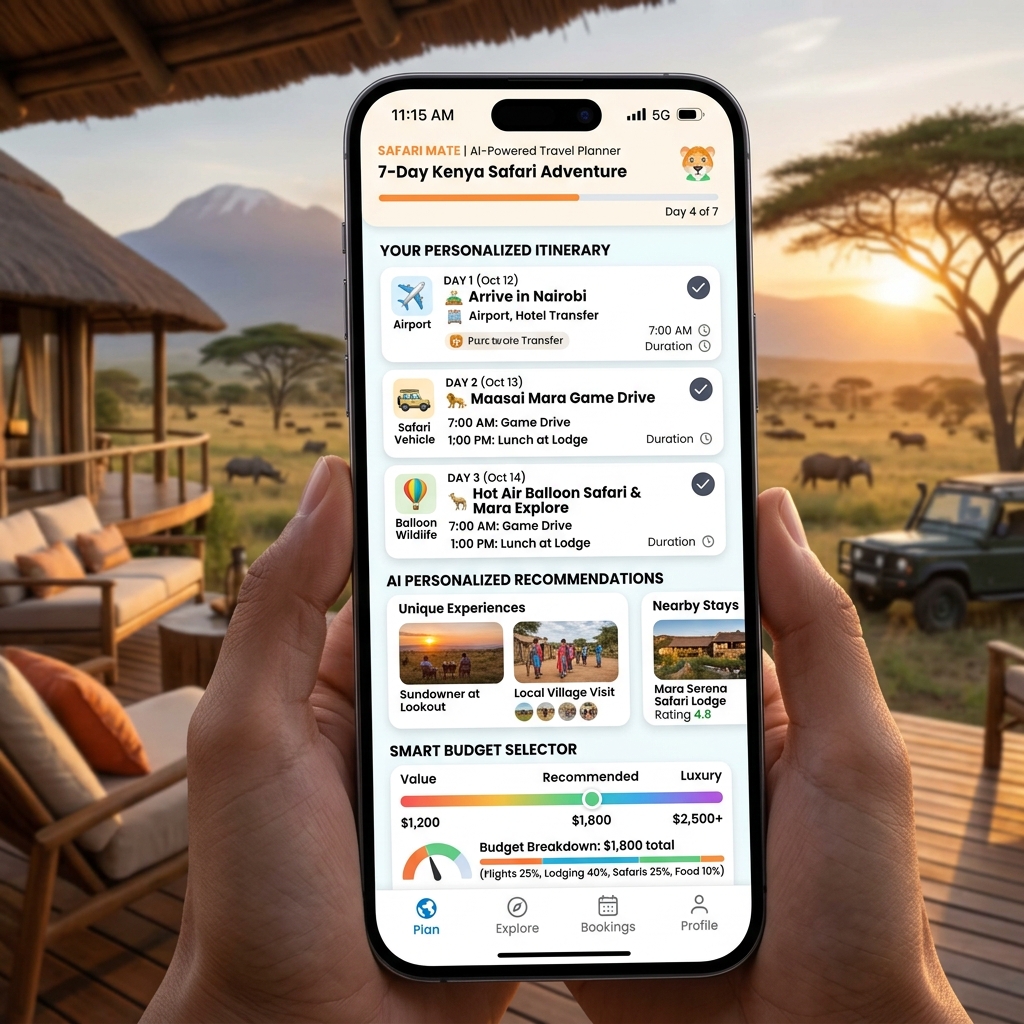
Agencies that rely on static, slow brochures and 24-hour response cycles will be outpaced by agile competitors. Conversely, travel operators that embrace AI-augmented travel advisory, Generative Engine Optimization (GEO), and intelligent automation are experiencing unprecedented booking velocity and record profit margins.
Here is an in-depth breakdown of how AI is reshaping the travel landscape in 2026—and the actionable playbook your business needs to lead the industry.
1. The Paradigm Shift: From Blue Links to Conversational Discovery
Historically, a traveler planning an international vacation would type disconnected queries into Google:
- "best time to visit Serengeti"
- "budget hotels in Arusha"
- "family safari tips Tanzania"
Today, travelers prompt AI engines (such as Google Gemini, OpenAI SearchGPT, and Perplexity) with comprehensive, multi-variable prompts:
"Design an 8-day family safari itinerary in Tanzania for 2 adults and 2 children aged 9 and 12 with a moderate luxury budget ($9,000 total). Focus on private game drives, lodges with swimming pools, and malaria-low risk zones."
Within seconds, the AI synthesizes an end-to-end itinerary with flight recommendations, park highlights, and hotel options.
What This Means for Your Travel Agency:
If your website only contains superficial "Contact Us for Prices" pages, AI engines cannot read, parse, or recommend your services. To be cited by AI search engines, your website content must be deeply structured, authoritative, and fact-dense.
[Traditional Search Journey]
Google Query ➔ 10 Blue Links ➔ Multiple Tab Openings ➔ High Friction & Slow Comparison

[AI-Driven Search Journey 2026]
Complex Conversational Prompt ➔ Synthesized AI Itinerary ➔ Direct Citation of Authoritative Agency ➔ Instant Booking
By investing in modern AI search optimization (GEO), travel brands ensure that their packages, itineraries, and expert recommendations become the primary cited sources in AI-generated travel answers.
2. Traditional Travel Agency vs. AI-Augmented Travel Agency
The debate is no longer "Human Travel Agents vs. AI". It is "Human Travel Agents who use AI vs. Agents who don't."
| Operational Function | Traditional Travel Agency | AI-Augmented Modern Travel Agency |
|---|---|---|
| Itinerary Drafting Time | 2 to 4 hours per custom client request | 2 to 5 minutes (AI draft reviewed by expert) |
| Response Window | 6 to 24 hours | Instant (<60 seconds via AI lead qualifiers) |
| Search Engine Discovery | Dependent only on traditional keyword SEO | Optimized for Google + Perplexity + SearchGPT (GEO) |
| After-Hours Inquiries | Lost or ignored until next business day | 24/7 Conversational AI Chat captures lead details & budget |
| Marketing Output | 1 blog post a month | Multi-channel destination hubs, video reels, localized emails |
| Direct Booking Rate | Low (<15% direct, mostly OTA dependent) | High (50%+ direct, zero OTA commission) |
Need a Website That Converts Visitors into Direct Paying Clients?
Most websites fail to generate sales because they are slow and lack conversion funnels. Joy Digital builds custom, sub-second Next.js web applications with 95+ PageSpeed, built-in SEO, and frictionless 1-click WhatsApp lead captures.
3. The Rise of Agentic AI: Autonomous Trip Planning & Booking
The biggest technological breakthrough in 2026 is Agentic AI—autonomous software agents that don't just generate text, but perform end-to-end digital actions across multiple platforms.
In travel, autonomous agents are beginning to:
- Cross-check dynamic airfare fluctuations and hold seat reservations.
- Monitor boutique hotel inventory across multiple regional supplier APIs.
- Re-route travel schedules automatically when regional flights are delayed or weather conditions shift.
- Sync daily itinerary updates directly into the traveler’s mobile calendar and WhatsApp.
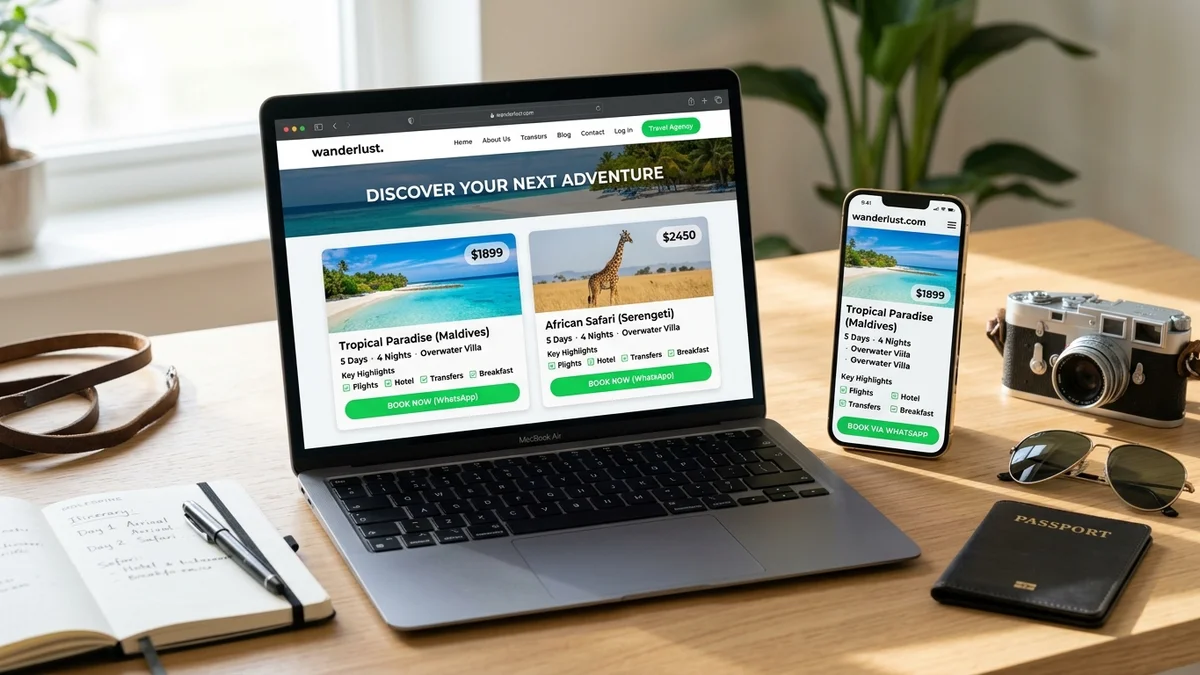
For tour operators, integrating agentic capabilities into your website means you can offer travelers self-service dynamic package builders that automatically calculate custom pricing based on group size, seasonality, and transport preferences.
4. AI-Powered Website Chatbots That Actually Convert
First-generation website chatbots were notoriously frustrating. They were rigid, rule-based popups that gave canned responses like "Please leave your email and we will call you back".
Modern 2026 travel bots are powered by Large Language Models (LLMs) connected directly to your agency's proprietary destination database and itinerary inventory.
How a High-Converting Travel AI Chatbot Works:
- Interactive Discovery: The bot engages the visitor naturally: "Planning a trip to Kenya? Are you looking for a luxury fly-in safari or an adventurous 4x4 overland experience?"
- Budget & Preference Qualification: In 3 short questions, the bot identifies dates, travel party size, budget tier, and specific preferences (e.g., honeymoon, photography, accessible travel).
- Instant Itinerary Recommendation: The bot presents 2 matching tour package previews with live pricing directly inside the chat window.
- Seamless Human Handoff: Once the traveler expresses high intent, the bot connects them directly to a dedicated destination specialist via WhatsApp or schedules a video consultation.
This reduces inquiry response times from 12 hours to less than 60 seconds, which research shows increases lead conversion by over 390%.
5. Mastering Generative Engine Optimization (GEO) in Tourism
As Google rolls out AI Overviews globally and travelers flock to conversational search assistants, travel agencies must optimize for both traditional search and AI search engines.
The 4 Pillars of Travel GEO:
- Entity-Based Content Structure: Clearly define your agency, tour guides, physical office locations, and accreditations using structured
OrganizationandTouristTripschema markup. - Direct Answer Paragraphs: Start destination sections with concise, 40-to-60-word definitive answers that AI models can easily parse and extract into synthesized overview snippets.
- Original First-Party Insights (E-E-A-T): AI engines actively prioritize content containing proprietary experience. Feature real traveler quotes, insider advice from local guides, original high-resolution photography, and verified ticket pricing.
- Comprehensive Itinerary Breakdowns: Publish complete day-by-day itineraries with clear headings (
Day 1: Arrival & Kigali City Tour,Day 2: Volcanoes National Park). AI crawlers love extracting structured chronological schedules.
6. Automating Repetitive Operations Without Losing the Human Touch
Running a successful travel business involves dozens of administrative bottlenecks: calculating exchange rates, reformatting supplier quotes, writing visa confirmation emails, and tracking down payment receipts.
AI automation allows boutique travel teams of 3 to 5 people to operate with the output and speed of a 50-person enterprise.
Inquiry Received on Website
        │
AI Lead Parser (Categorizes destination, budget, urgency)
        │
Automated Dynamic Quotation Generated via Travel CMS
        │
Travel Consultant Reviews, Personalizes, and Adds Insider Advice
        │
Instant WhatsApp & Email Proposal Dispatched to Client
        │
Automated Polite Follow-up Sequence Scheduled (Day 2, Day 5, Day 9)
By automating the mechanical 80% of administrative work, your travel consultants can dedicate their full attention to what truly drives bookings: consultative relationship building, empathy, and bespoke holiday customization.
7. The Irreplaceable Human Factor: Why Travelers Still Need Experts
Despite rapid advances in artificial intelligence, travel is inherently emotional, high-stakes, and unpredictable.
When a sudden airline strike cancels connecting flights, a volcanic ash cloud grounds airspace, or a traveler faces a medical emergency in a remote national park, an AI algorithm cannot step in to re-route private transport, negotiate hotel extensions, or provide reassuring human empathy.
Furthermore, high-net-worth travelers booking luxury honeymoons, private jet expeditions, or milestone anniversary trips do not want automated recommendations; they desire the seasoned judgment, taste, and personal verification of an expert who has walked the terrain.
The future of tourism belongs to AI-empowered human specialists who combine sub-second technological speed with authentic local hospitality.
8. Actionable 5-Step Roadmap for Travel Businesses in 2026
If you want to capitalize on the AI revolution today, follow this structured roadmap:
- Step 1: Upgrade to a Modern Web Architecture: Ditch sluggish legacy CMS platforms. Build a high-speed travel agency website that passes Core Web Vitals and provides rich interactive itinerary layouts.
- Step 2: Implement Complete Tourism Schema: Add JSON-LD structured data for
TouristTrip,Offer,Product, andFAQPageacross all package and destination pages. - Step 3: Deploy an Intelligent Conversational Lead Assistant: Add an AI chatbot or smart WhatsApp integration that qualifies visitors and provides instant travel guidance 24/7.
- Step 4: Adopt AI for Internal Operations: Use AI tools to accelerate itinerary drafting, proposal writing, and social media content creation.
- Step 5: Continuously Measure Conversion Efficiency: Track direct booking margins, lead response velocity, and organic traffic attribution through GA4.
Frequently Asked Questions (FAQs)
How is AI transforming travel planning and booking in 2026?
AI has shifted travel planning from static search queries to conversational, hyper-personalized trip curation. In 2026, travelers use multimodal AI assistants to generate customized multi-city itineraries, compare real-time flight and hotel bundles, and receive instant recommendations tailored to specific budgets, dietary requirements, and mobility preferences.
Will AI replace traditional travel agents and tour operators?
No. While AI handles initial itinerary drafts and data curation in seconds, human travel consultants remain indispensable for ground verification, emergency support during disruptions, custom luxury accommodations, and authentic local relationships. The winning model is the AI-augmented agency, where consultants use AI to double their sales efficiency without losing human empathy.
What is Generative Engine Optimization (GEO) in travel digital marketing?
Generative Engine Optimization (GEO) is the practice of optimizing website content so that AI search engines (like Google AI Overviews, Perplexity, and SearchGPT) cite your travel brand as a verified source in synthesized travel answers. This requires structured schema data, direct factual answers, original destination imagery, and high digital brand authority.
What are the most practical AI tools travel agencies should use today?
Agencies should implement AI-powered website chatbots for 24/7 lead qualification, generative AI tools for drafting detailed day-by-day itineraries, dynamic CRM automation for email and WhatsApp follow-ups, and AI content assistants for creating localized destination guides.
How does an AI-powered travel website increase booking conversion rates?
AI websites analyze traveler preferences in real-time to suggest relevant tour packages, calculate instant price estimates, answer complex itinerary queries through conversational bots, and qualify leads before routing them to consultants, reducing response times from 12 hours to under 2 minutes.
Future-Proof Your Travel Agency with Joy Digital
The AI revolution in travel is not coming—it is already here. Travel businesses that update their digital presence today will dominate search results, captivate modern travelers, and secure direct bookings at zero OTA commission.
At Joy Digital, we engineer bespoke, high-performance web platforms and AI-driven SEO strategies for ambitious travel agencies, tour operators, and luxury resorts across the globe.
👉 Claim Your Free Travel Website & AI-Readiness Audit – Discover where your website is losing bookings to OTAs, verify your readiness for Google AI Overviews and Perplexity search, and receive an actionable step-by-step optimization roadmap. Or schedule a consultation with our travel technology team today!
Recommended Services & Solutions
Frequently Asked Questions

Specialist in AI-driven search architectures, Next.js web applications, and generative search optimization (GEO) for global hospitality and tourism brands.