
The Monolithic Bottleneck
For over a decade, WordPress was the undisputed standard for building web properties. However, modern digital growth strategies require performance standards that traditional monolithic Content Management Systems (CMS) were never architected to support. When database calls, heavy visual page builders, and dozens of third-party plugins compete for server execution time on every page request, performance suffers drastically.
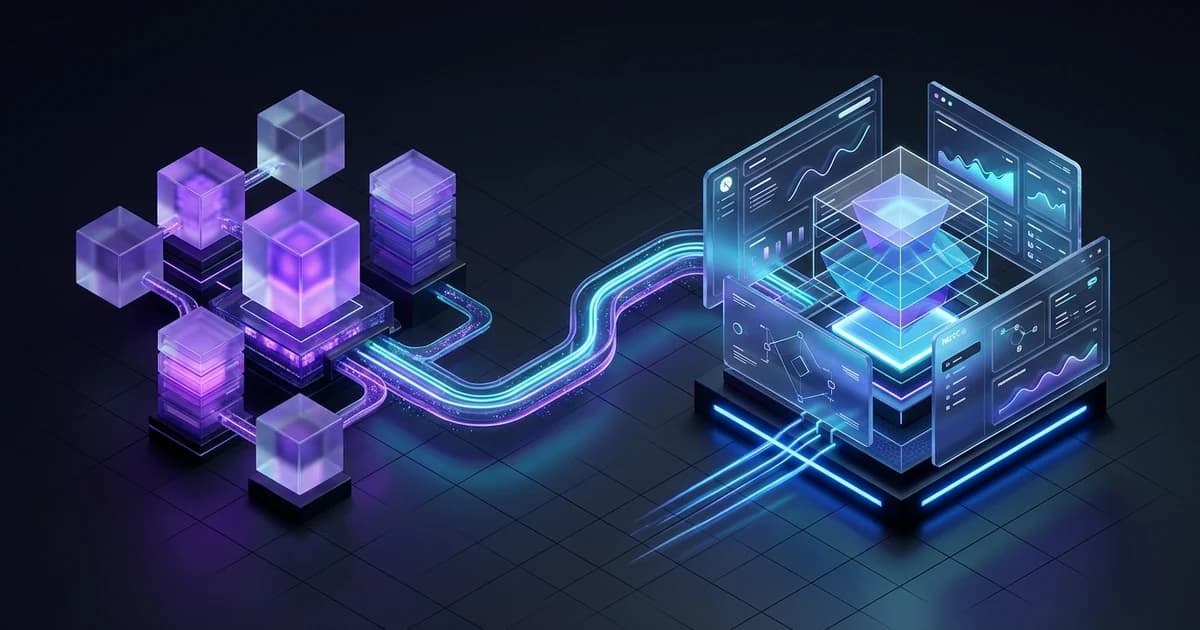
A WordPress to Next.js migration represents a fundamental architectural shift from tightly coupled monolithic systems to a modern, decoupled, API-first model. By pairing Next.js as a high-performance frontend framework with a headless CMS backend, enterprises achieve sub-second page loads, total visual freedom, and enterprise-grade security.
Why Modern Enterprises Are Decoupling WordPress
The decision to migrate is rarely driven by novelty; it is driven by revenue metrics, Google Core Web Vitals targets, and infrastructure scaling costs.
1. Eliminating the Monolithic Overhead
In traditional WordPress setups, the backend server processes PHP code, queries the MySQL database, and renders HTML dynamically on every single request. Under traffic spikes or complex page layouts, this creates high server latency (TTFB) and slow Largest Contentful Paint (LCP).
[Traditional Monolithic WordPress]
User Click ➔ Apache/Nginx Server ➔ PHP Runtime ➔ MySQL DB Query ➔ Heavy Plugin Execution ➔ HTML Response (3.5s – 6.0s)

[Decoupled Headless Next.js Architecture]
User Click ➔ Global Edge CDN Cache ➔ Pre-rendered Static HTML & JSON ➔ Instant Sub-Second Hydration (< 0.8s)
Next.js shifts this computational overhead away from the runtime server. Pages can be pre-rendered at build time using Static Site Generation (SSG) or cached globally using Incremental Static Regeneration (ISR), serving visitors cached static assets in under 80 milliseconds.
2. Uncompromising Security Architecture
Traditional WordPress installations present an expansive attack surface due to vulnerable PHP plugins, public /wp-admin login portals, and dynamic SQL injection vectors. In fact, over 90% of CMS vulnerabilities stem from unpatched third-party plugins.
In a decoupled Next.js architecture, the public-facing frontend is completely isolated from the CMS backend:
- The WordPress database is hosted in a secure, private network or behind authentication proxies.
- Attackers cannot target your database directly through web forms or client-side scripts because no application server is publicly exposed.
- Static assets hosted on serverless Edge CDNs are virtually immune to DDoS attacks and server crashes.
Architectural Comparison: Traditional WordPress vs Decoupled Next.js
| Architectural Layer | Traditional WordPress | Decoupled Next.js |
|---|---|---|
| Rendering Strategy | Server-side PHP rendering on every dynamic request | Hybrid: SSG, ISR, and Edge SSR |
| Database Access | Direct MySQL connection exposed to web server | Isolated backend via WPGraphQL or REST APIs |
| Security Risk | High (Plugin exploits, public wp-login, SQL injection) | Low (Immutable static assets on global Edge CDNs) |
| Global Latency | Dependent on single origin server location | Near-zero (Distributed across 300+ global Edge points) |
| Google Core Web Vitals | Frequently fails LCP & INP benchmarks | Guarantees 95+ Mobile PageSpeed score |
| Developer Experience | Rigid PHP templates & complex hook overrides | Modern React Server Components, TypeScript & Tailwind CSS |
Key Steps in the Migration Roadmap
A structured migration ensures complete data integrity, preserved search engine rankings, and zero disruption to your daily editorial operations.
+-------------------+      +--------------------+      +-----------------------+
| 1. Audit & Schema | ---> | 2. Headless API    | ---> | 3. Next.js Frontend   |
|    Mapping        |      |    Configuration   |      |    Architecture       |
+-------------------+      +--------------------+      +-----------------------+
                                                                   |
+-------------------+      +--------------------+                  v
| 5. Deployment &   | <--- | 4. SEO Strategy &  | <----------------+
|    Edge Caching   |      |    301 Redirects   |
+-------------------+      +--------------------+
Phase 1: Content Audit and Schema Mapping
Before writing a single line of frontend code, catalog every custom post type, custom field (ACF), media attachment, and taxonomy in WordPress. Map these elements to structured JSON payloads accessible via GraphQL (WPGraphQL) or the WordPress REST API.
Phase 2: Headless API & Backend Isolation
Configure WordPress strictly as a headless content repository. Disable front-end theme execution, lock down /wp-admin behind two-factor authentication (2FA) and IP whitelisting, and generate optimized GraphQL queries that fetch only the exact data required for each route.
Phase 3: Frontend Architecture Setup & Component Rebuild
Initialize your modern Next.js application using the App Router. Configure dynamic routing, establish Global Styling tokens with Tailwind CSS, and rebuild reusable UI components based on your design system.
Phase 4: Dynamic Data Fetching (SSG & ISR)
Leverage React Server Components and Next.js data caching mechanisms to pull data from your headless backend. Use generateStaticParams for blazing-fast pre-rendering of high-traffic blog posts, case studies, and service pages, paired with Incremental Static Regeneration (ISR) so edits made in WordPress reflect on the live site in real time without a complete rebuild.
Phase 5: Production Deployment & Edge Caching
Deploy your Next.js frontend to a modern serverless platform (Vercel, Render, or AWS Amplify) connected to a global Edge CDN. Configure automated preview deployments for your content marketing team.
Preserving Search Authority During Migration
A major risk during architectural migrations is the accidental loss of organic search visibility. Preserving SEO value requires systematic, mathematically precise execution:
🛡️ Critical Migration Check: Never launch a decoupled migration without 1:1 URL parity and verified 301 server redirects. Broken links will immediately dilute crawl equity and keyword rankings.
- URL Structure Parity: Map every target URL 1:1. If structural adjustments are necessary, configure strict 301 redirects using Next.js route matching configurations in
proxy.tsornext.config.ts. - Metadata Schema Preservation: Ensure custom meta titles, meta descriptions, Open Graph cards, Twitter metadata, and structured JSON-LD schemas (Article, Organization, FAQPage) are fetched via API endpoints and rendered natively in the Next.js
<head>. - Automated Dynamic Sitemap Generation: Implement automated XML sitemaps in Next.js (
app/sitemap.ts) that update instantly whenever content editors publish or update posts inside the CMS. - Pre-Rendered HTML for Instant Crawls: Unlike client-rendered Single Page Applications (SPAs) that force Googlebot to wait for JavaScript execution, Next.js delivers pure pre-rendered HTML on the initial server response, ensuring instantaneous indexing.
Scalable Engineering with Joy Digital
At Joy Digital, we specialize in high-performance custom web development and Next.js web engineering for international B2B brands, tour operators, and fast-growing startups.
Migrating from WordPress to Next.js is not just a cosmetic redesign—it is an infrastructure modernization designed to slash bounce rates, increase organic search traffic, and simplify technical operations.
Our team ensures:
- Zero Downtime Cutover: Seamless DNS transition with zero service interruption.
- 100% SEO Preservation: Comprehensive crawl audits and 1:1 redirect enforcement.
- Editorial Continuity: Content teams keep using the familiar WordPress Gutenberg or modern Headless CMS dashboard (Sanity, Strapi).
- Sub-Second Performance: 95+ PageSpeed scores on mobile 4G networks globally.
Ready to Modernize Your Web Architecture?
Don't let legacy infrastructure, bloated plugins, and slow load times limit your business growth. Request a Free Website & SEO Audit or Contact Joy Digital today to receive a comprehensive migration blueprint and flat-rate quote.
Recommended Services & Solutions
Frequently Asked Questions

Enterprise web engineers and SEO architects specializing in sub-second Next.js applications, headless CMS migrations, and high-converting B2B platforms.