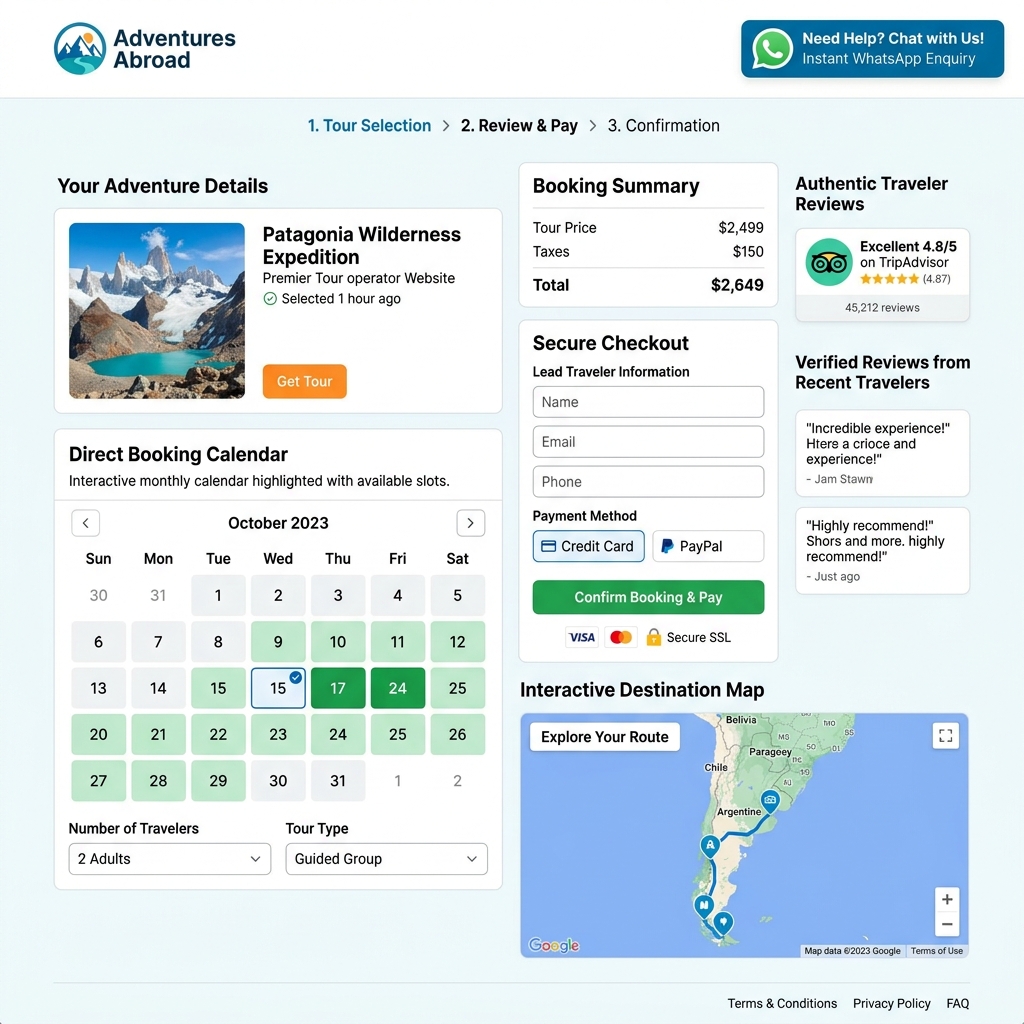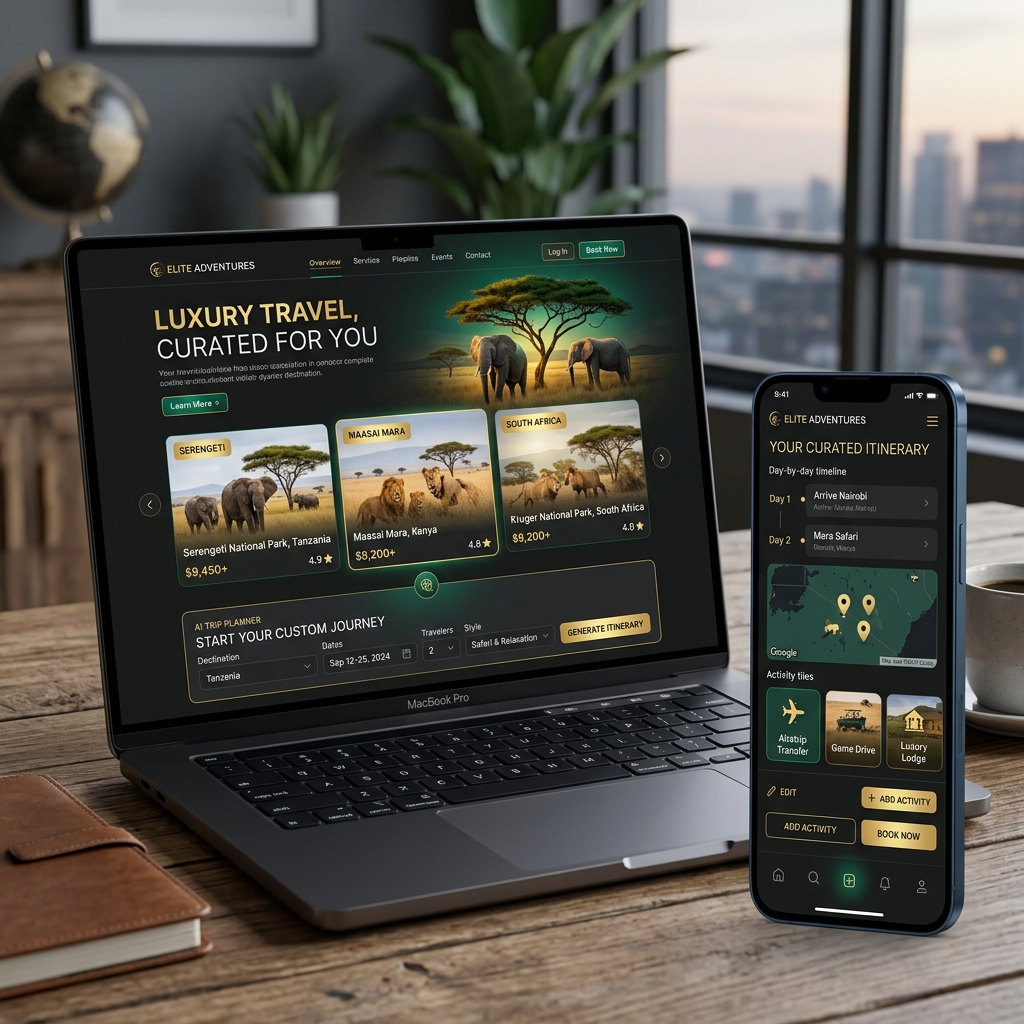
Imagine a traveller searching Google for a holiday package, safari experience, or international tour operator. They find three competing travel businesses, compare their reviews and websites, and send an enquiry to one of them.
But your travel agency never appears in those search results.
This is a common challenge for travel agency owners and tour operators. You may offer excellent travel packages, personalised itineraries, and competitive pricing, but if potential customers cannot find your business online, you could be missing valuable booking opportunities every single day.
The problem may not be your travel packages. It could be your online visibility.
Local SEO for travel agencies helps your business appear in relevant Google searches, connect with travellers actively searching for your services, and generate more opportunities for direct enquiries.
In this guide, let's explore how travel businesses can use local SEO to attract more potential customers and build a stronger online presence.
1. Why Are Travellers Finding Your Competitors Instead of Your Travel Agency?
Today's travellers rarely choose a travel company without doing comprehensive online research. Whether booking a family vacation, a luxury safari, or an international business trip, Google is almost always their first stop.
Before contacting an agency, travellers frequently search for:
- Best travel agency near me
- International tour packages from Chennai
- Best safari tour operators in Africa
- Family holiday packages in India
- Customised Europe tour packages
- Trusted travel agency for international trips
If your business does not appear for these high-intent searches, potential customers will discover and book with your competitors first.
[Traveller Search Journey]
Google Search ("Best travel agency near me")
        │
        ├── Top 3 Google Maps Profiles (Competitors with 50+ reviews)
        ├── High-Ranking Tour Destination Pages (Competitors)
        └── Invisible: Your Agency (Unclaimed profile, weak local SEO)
Common Reasons Your Travel Agency Is Missing from Google:
- Your Google Business Profile is incomplete or outdated: Missing hours, incorrect categories, or an unverified address prevent Google from trusting your listing.
- Your website is not optimised for travel-related search keywords: Target pages lack destination names, departure cities, and package specifics.
- Your business has very few genuine customer reviews: Social proof drives both rankings and customer decisions. Without reviews, travellers hesitate.
- Your tour and destination pages are not properly structured: Travellers and search engines cannot find detailed itineraries, pricing guidelines, or inclusions.
- Your competitors have stronger local search visibility: Competing agencies actively optimize local citations, location landing pages, and travel content.
💡 The Opportunity: Instead of depending entirely on word-of-mouth referrals, expensive paid advertisements, or third-party booking platforms (OTAs) that charge 15%–25% commissions, you can build an organic search presence that consistently helps travellers discover your business. Learn more about this in our guide on Travel agency SEO.
2. Google Business Profile: Make Your Travel Business Easier to Find
When travellers search for travel agencies or tour operators in a particular city or region, Google prioritises local business listings and Google Maps results (the Local 3-Pack).
Your Google Business Profile (GBP) is the single most important asset for becoming discoverable in these local searches.
However, simply creating a profile is not enough. It needs accurate, complete, and engaging business information.
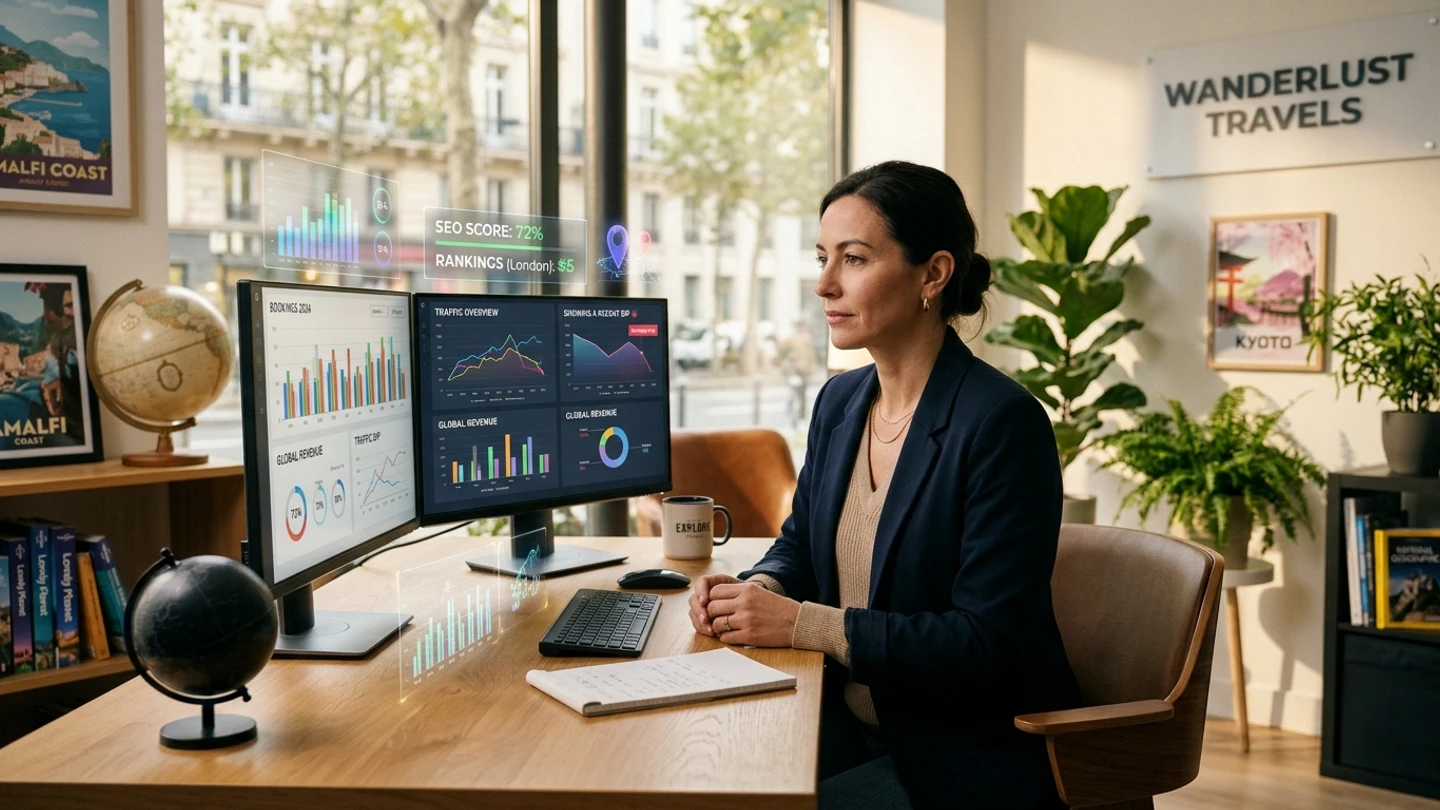
Key Areas to Optimise on Your Google Business Profile:
- Accurate Business Information: Ensure your official business name, phone number, website URL, operating hours, and eligible physical address or service area match your website exactly.
- Relevant Business Categories: Choose the most accurate primary category (such as Travel Agency, Tour Operator, or Sightseeing Tour Agency) and add relevant secondary categories based on the actual services you provide.
- Detailed Travel Services: Clearly list and describe your core services, including customised holiday planning, wildlife safaris, visa assistance, group departures, and flight or hotel reservations.
- High-Quality Business Photos: Regularly upload authentic, high-resolution photographs of your tours, destinations, satisfied traveller groups, and your physical office team. Avoid generic stock photos.
- Customer Reviews & Responses: Proactively encourage happy travellers to leave honest reviews. Respond professionally to every review—both positive feedback and constructive critiques.
An updated, trustworthy profile helps travellers verify your credibility before they ever pick up the phone or send a message. For a detailed roadmap, explore our complete walkthrough on Google Business Profile for travel agencies.
Need a Website That Converts Visitors into Direct Paying Clients?
Most websites fail to generate sales because they are slow and lack conversion funnels. Joy Digital builds custom, sub-second Next.js web applications with 95+ PageSpeed, built-in SEO, and frictionless 1-click WhatsApp lead captures.
3. Target the Keywords Your Potential Travellers Actually Search For
One of the biggest SEO mistakes travel businesses make is targeting only broad, generic keywords such as "travel agency" or "tour packages".
These broad terms are fiercely competitive, dominated by multi-million-dollar booking aggregators, and often fail to reflect what a traveller is ready to book right now.
Instead, focus on search terms that combine services, destinations, departure points, and specific customer intent.
Travel Search Intent Matrix
| Keyword | Search Intent | Target Page Type |
|---|---|---|
| Travel agency in Chennai | Local discovery | Local city landing page / Homepage |
| International tour operators in India | Service discovery | Core agency services page |
| Bali honeymoon packages from Chennai | High-intent package enquiry | Dedicated destination itinerary page |
| African safari tour operators | Specialist niche service | Safari adventure portal / Experience page |
| Customised Europe holiday packages | Booking research & planning | Multi-country tour overview page |
| Best travel agency near me | Urgent local enquiry | Google Business Profile & Local landing page |
Your website should have dedicated, well-structured pages for the specific destinations and travel services you actually operate.
For instance, if your agency specialises in African safaris, don't bury that expertise inside a generic "Services" dropdown. Build a dedicated safari hub explaining your national park routes, migration calendars, vehicle types, lodging tiers, and booking process.
⚠️ Important SEO Rule: Avoid keyword stuffing. Never cram dozens of unrelated keywords onto a single page. Use relevant keywords naturally where they match the page content, user intent, and real offerings.
4. Is Your Travel Website Converting Visitors into Enquiries?
Getting visitors to your website is only the first step in digital marketing.
The bigger question is: What happens after they arrive?
A traveller visiting your website should be able to instantly understand what you offer, where you operate, and how to contact your team without confusion or friction.
Essential Conversion Elements Every Travel Website Needs:
- Destination-Specific Pages: Dedicated, comprehensive pages for each country, region, and tour style you serve.
- Tour Package Details: Clear daily itineraries, clear inclusions, exclusions, difficulty levels, and packing essentials.
- Prominent Enquiry CTAs: Easy-to-spot enquiry buttons, prominent phone numbers, and direct 1-tap WhatsApp consultation buttons.
- Customer Testimonials & Case Studies: Highlight authentic reviews, traveller photos, and feedback from past departures.
- Mobile-Friendly Design: More than 65% of holiday research occurs on smartphones. Your site must offer effortless mobile navigation.
- Blazing Fast Page Speeds: Travellers abandon slow-loading itineraries within seconds. Fast pages keep prospects engaged.
A professional, high-performance website combined with strategic Local SEO Services turns passive Google searchers into qualified booking enquiries.
🚀 Free SEO & Website Audit for Travel Agencies
Not sure why your travel website isn't ranking on Google or converting visitors into phone calls and WhatsApp enquiries?
Let our technical SEO team analyze your website speed, local keyword rankings, and Google Business Profile.
👉 Claim Your Free Local SEO & Website Audit — Receive an actionable 20-point diagnostic report tailored specifically to your travel agency.
5. Build Location-Specific Pages to Attract the Right Travellers
Are you targeting travellers from multiple regional hubs, departure airports, or international markets?
If so, your website needs a clear, location-based content architecture.
For example, an Indian travel agency catering to clients across different major cities can create dedicated regional pages:
- International Tour Packages from Chennai
- Customised Holiday Packages from Bangalore
- Luxury Tours from Mumbai
- Europe Tour Packages from Hyderabad
Similarly, an international safari operator targeting travellers from North America or Europe should build destination pages tailored to the genuine experiences it provides (e.g., Serengeti Migration Safaris, Kruger Luxury Lodges, Gorilla Trekking Expeditions).
                  [Travel Website Root]
                            │
     ┌──────────────────────┼──────────────────────┐
     ▼                      ▼                      ▼
[City / Hub Pages]   [Destination Pages]    [Specialty Niche]
- Chennai Departures   - Kenya Safaris        - Honeymoon Tours
- Bangalore Packages   - Bali Holidays        - Wildlife Photography
- Mumbai Flights       - Europe Circuits      - Luxury Private Jets
Best Practices for Location Pages:
- Unique & Valuable Content: Each location page must offer unique details—such as local departure advice, flight routes, visa consultation specifics, or regional booking desk contacts.
- Avoid "Doorway" Duplicate Content: Never clone a page 20 times while simply swapping the city name. Search engines penalize programmatic low-quality duplicate pages. Focus on real customer needs and genuine business coverage.
6. Why Customer Reviews Matter for Travel Businesses
Travel is an experiential, high-trust investment. Whether spending $2,000 on a family beach vacation or $15,000 on a luxury private safari, travellers want total reassurance that your company is reputable, licensed, and reliable.
Customer reviews provide the social proof needed to overcome booking hesitation.
Encourage Genuine Post-Trip Feedback Across These Touchpoints:
- Booking & Planning Experience: How responsive and knowledgeable was your team during itinerary customisation?
- Itinerary Quality: Did the actual hotels, vehicles, and guided tours match what was promised?
- On-Ground Support: Was local assistance available 24/7 if flights were delayed or itineraries changed?
- Overall Value & Reliability: Would the traveller recommend your agency to their friends and colleagues?
Professional Review Etiquette:
- Respond to All Reviews: Thank positive reviewers with personalized notes mentioning their destination, and address negative feedback with empathy, facts, and prompt resolution.
- Never Buy Fake Reviews: Purchasing fake reviews violates Google guidelines and destroys brand credibility. Genuine, authentic feedback from real travellers always outperforms artificial ratings in the long run.
7. How Local SEO Can Help Reduce Your Dependence on Paid Advertising
Paid advertising (Google Search Ads, Meta Ads) can bring short-term traffic, but the moment you pause your daily ad budget, your lead pipeline dries up overnight. Furthermore, rising ad costs continue to eat into your package profit margins.
SEO takes a fundamentally different, sustainable approach.
With a well-executed organic search strategy, your travel business systematically builds long-term organic authority through:
- Google Business Profile Optimisation: Capturing high-intent local travellers right when they search on Google Maps.
- Location-Based Keyword Architecture: Ranking for localized searches without paying per click.
- Rich Destination & Itinerary Content: Establishing topical authority across popular vacation routes.
- Technical Website Optimisation: Passing Google Core Web Vitals to deliver lightning-fast loading speeds on mobile networks.
- Strategic Internal Linking: Guiding both users and search bots seamlessly from destination overviews to enquiry forms.
- High-Quality Local Citations & Backlinks: Earning mentions from regional business chambers, tourism boards, and industry publications.
- Active Review Management: Continuously gathering authentic reviews to improve local rank signals.
While SEO is a long-term investment requiring consistent effort, it creates an enduring digital pipeline. For in-depth insights on driving direct bookings without OTA commissions, check out our guide on SEO for tour operators.
8. How to Know Whether Your Travel SEO Strategy Is Working
Don't evaluate SEO success solely by looking at keyword rankings.
For a commercial travel business, the true measure of success is whether your online search visibility is generating qualified, high-intent booking enquiries.
Key Travel SEO Metrics to Track:
| Metric Channel | What to Monitor | Why It Matters |
|---|---|---|
| Google Search Console | Impressions, clicks, and average CTR for destination queries | Identifies which itineraries attract organic interest |
| Google Business Profile | Phone calls, website clicks, and direction requests | Measures local discovery and direct customer intent |
| Website Enquiries | Form submissions, direct phone calls, and WhatsApp chats | Proves whether traffic is converting into leads |
| Landing Page Performance | Bounce rates, average time on page, and scroll depth | Shows which destination pages hold traveller attention |
| Lead Quality & Revenue | Conversion rate from enquiry to paid booking | Demonstrates the ultimate return on investment (ROI) |
By tracking these indicators in GA4 and Search Console, you can clearly see which SEO initiatives are driving genuine commercial growth.
Conclusion: Your Next Traveller Could Be Searching on Google Right Now
Your travel business may already have exceptional tour packages, seasoned guides, and memorable travel experiences.
But are potential travellers actually discovering your business when they search online?
A structured local SEO strategy empowers travel agencies, tour operators, and tourism companies to stand out on Google Maps, build deep traveller trust, and generate direct booking enquiries without paying exorbitant third-party commissions.
Don't let potential travellers book with competing operators simply because your agency is invisible on Google.
Make your travel business easy to find. Build your local visibility. Turn everyday search opportunities into confirmed bookings.
Want More Enquiries for Your Travel Business?
At JoyDigital, we help travel agencies, tour operators, and safari companies engineer high-performance digital platforms and execute dominant local search strategies.
Whether you run an independent travel agency, an outbound international tour company, a luxury safari outfit, or a destination management company (DMC), we tailor solutions designed around your operating locations and commercial targets:
- 📊 Get Your Free Local SEO & Website Audit: Understand your current Google search visibility and discover immediate opportunities for growth.
- 🌍 Explore our Travel & Safari Website Solutions: Discover custom Next.js travel portals engineered with custom itinerary builders, 1-tap WhatsApp booking channels, and automated SEO architecture.
- 🚀 Learn more about our comprehensive Local SEO Services to dominate local Google search results in your city.
Contact JoyDigital Today and take the next step towards sustainable online visibility and more direct travel enquiries.
Recommended Services & Solutions
Frequently Asked Questions
Founder at JoyDigital and Technical SEO Specialist helping travel agencies, safari companies, and tour operators dominate Google local search and capture direct international bookings.