For decades, many tourism and travel businesses operated successfully on word-of-mouth referrals, local storefronts, printed brochures, and partnerships with local hotels or booking agents. Later, the rise of social media platforms like Instagram and third-party online travel agencies (OTAs) such as Viator, GetYourGuide, and TripAdvisor provided new ways to attract travelers.
While social media and OTAs have their place, relying exclusively on rented channels puts your travel business at severe risk. Algorithm changes can slash your social reach overnight, and OTAs quietly deduct between 15% and 25% in commissions from every single booking you fulfill.
In 2026, traveler behavior has permanently transformed. Whether planning a 10-day luxury wildlife safari, a corporate retreat, a private island getaway, or a guided cultural trekking tour, travelers conduct exhaustive online research before committing their hard-earned money.
A dedicated tourism business website is no longer an optional luxury—it is the operational backbone and central engine of your travel company's authority, profitability, and international growth.
Here is an in-depth analysis of why your tourism business needs a professional website, the commercial advantages it delivers, and how it transforms passive website visitors into confirmed direct bookings.
1. Build Instant Trust and Legitimacy with High-Ticket Travelers
Travel is an intangible, high-trust purchase. Unlike buying a physical product that can be returned if defective, travelers invest hundreds or thousands of dollars into an experience that has not happened yet. Furthermore, international tourists are often wiring funds to an operator in another country or continent.
When potential guests discover your company on Instagram, Facebook, or a third-party marketplace, their very first instinct is to Google your business name. If they discover no official website, a broken landing page, or an outdated platform filled with generic stock photos, immediate red flags arise:
- “Is this a registered, legitimate tour operator?”
- “What happens if our guide fails to show up at the airport?”
- “Can I trust this company with my credit card or bank transfer?”
A modern, professionally engineered tour operator website builds immediate credibility by providing verifiable trust signals:
- Official Licensing & Accreditations: Display memberships with international and national tourism boards (such as IATA, ASTA, TATO, KATO, or regional tourism ministries).
- Authentic Guest Reviews & Video Testimonials: Real stories, uncensored feedback, and TripAdvisor or Google Review widgets that prove consistent traveler satisfaction.
- Transparent Company Background: Photos and bios of your founders, certified field guides, drivers, and local operations staff.
- Physical Office & Transparent Contact Channels: Verified street addresses, dedicated landline numbers, and official business email addresses (e.g.,
info@yourtravelcompany.cominstead of a generic Gmail account).
When travelers see a secure, polished, and transparent web presence, hesitation dissolves, giving them the confidence to take the next step.
2. Break Free from the 20% to 25% OTA Commission Trap
Third-party booking platforms like Viator, Expedia, Booking.com, and GetYourGuide have made it easy to get initial exposure, but that convenience comes with an exorbitant long-term cost.
| Comparison Metric | Third-Party OTAs (Viator, Booking.com) | Your Own Tourism Business Website |
|---|---|---|
| Commission Fees | 15% – 25%+ per booking | 0% Commission (Keep 100% of revenue) |
| Brand Ownership | Customer belongs to the OTA platform | Customer belongs directly to your business |
| Customer Data | Masked emails, restricted direct contact | Full access to guest email, phone, and travel history |
| Competitor Distractions | Competitor ads displayed right next to your tour | 100% focused exclusively on your travel packages |
| Pricing Control | Bound by strict rate-parity clauses | Freedom to offer custom perks, upgrades, and direct discounts |
| Repeat Business | OTA retargets traveler with competitor offers | You build lifelong direct client loyalty |
If your business generates $150,000 in tour bookings through OTAs annually, you could be surrendering $30,000 to $37,500 straight to intermediaries. Investing a fraction of that amount into a high-performance custom travel website development project pays for itself within months.
By directing travelers to book or enquire directly on your website, you can either pocket those savings to boost profit margins or reinvest them into value-added perks (such as complimentary airport transfers or curated welcome dinners) that make your packages irresistible. For more tactical details, explore our guide on how tour operators can stop losing 25% to OTAs and drive direct bookings.
3. Reach High-Paying International Travelers Beyond Local Borders
Local word-of-mouth and hotel concierge recommendations can only carry your business so far. If you run safari expeditions in East Africa, cultural tours in South India, luxury villa getaways in Bali, or desert excursions in Dubai, your highest-margin clients are sitting thousands of miles away in the United States, the United Kingdom, Germany, Australia, and the Gulf region.
These travelers do not know your local street address or pick up local newspapers. They start their vacation planning on Google search bars, typing phrases like:
- “Best 7-day private safari operator in Tanzania”
- “Customized family heritage tours in South India”
- “Luxury eco-resort with private guided excursions”
- “All-inclusive adventure trekking package with certified guides”
A well-structured tourism business website powered by strategic Travel SEO Services allows your business to rank prominently for these high-intent international queries.
[International Search Journey]
Foreign Traveler Googles "Private Kenya Safari Operator"
                   │
                   ▼
Discovers Your Optimized Destination & Itinerary Page
                   │
                   ▼
Reviews Daily Itinerary, Inclusions & Verified Client Testimonials
                   │
                   ▼
Submits Tailored Enquiry Form / Starts Direct WhatsApp Chat
                   │
                   ▼
High-Ticket Direct Booking Secured (Zero Intermediary Cut)
With localized landing pages, dedicated destination hubs, multi-currency displays, and multilingual support, a website transforms your local business into an accessible global brand open for discovery 24 hours a day, 365 days a year.
4. Showcase Tour Packages with Interactive, High-Converting Architecture
Social media carousels and static PDF brochures have severe limitations: PDFs are difficult to navigate on mobile devices, cannot be indexed easily by search engines, and quickly become outdated when hotel rates or national park entrance fees change.
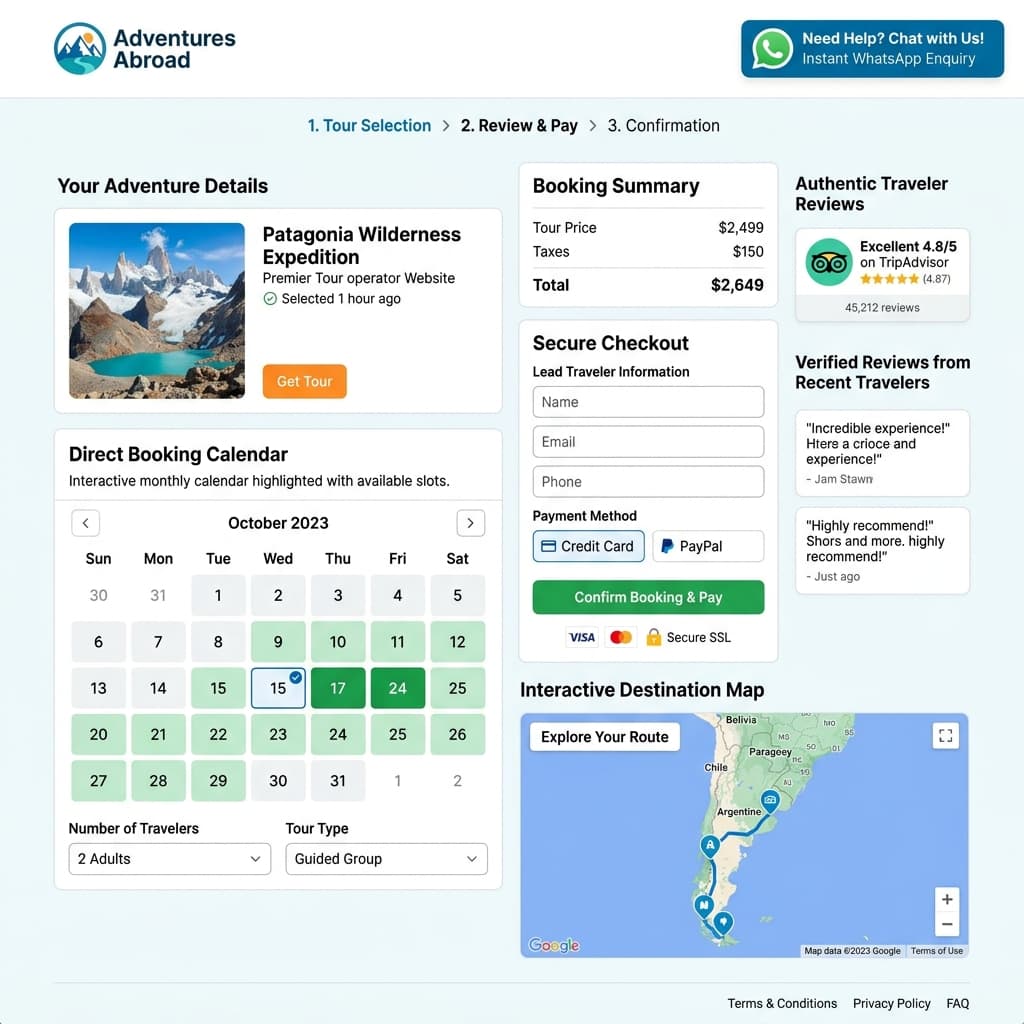
A professional tourism website allows you to build comprehensive, interactive tour package pages that answer every possible question a traveler might have:
Key Elements of a High-Converting Tour Package Page:
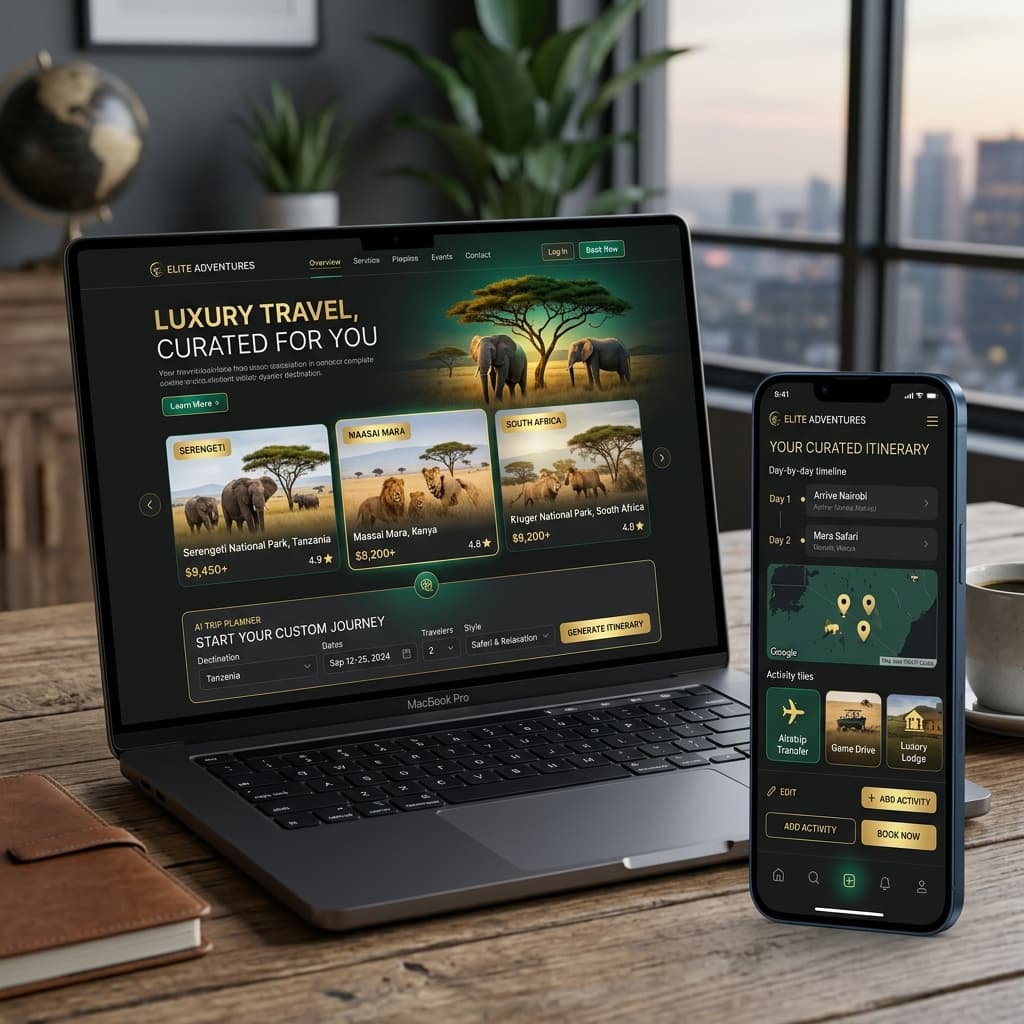
- Day-by-Day Interactive Itinerary: Chronological breakdowns with interactive route maps, drive times, and highlights of each day's activities.
- Crystal-Clear Inclusions & Exclusions: Explicitly stating what is covered (meals, park fees, 4x4 safari cruiser, domestic flights) and what is not (tips, international airfare, travel insurance) prevents misunderstandings and accelerates booking decisions.
- High-Resolution Photography & Video Galleries: Showcasing actual accommodations, safari vehicles, gourmet meals, and wildlife encounters rather than generic stock graphics.
- Accommodation Tiers: Allowing guests to choose between budget camping, mid-range lodges, or ultra-luxury boutique tented camps with dynamic pricing indications.
- Downloadable Itinerary Summary: A clean, 1-click branded PDF download option that corporate planners or family heads can share with their travel companions.
When your packages are presented cleanly with intuitive navigation, visitors spend more time engaging with your offerings, directly boosting conversion rates. Discover more structural best practices in our comprehensive checklist of must-have travel website features for tour operators.
5. Generate More Qualified Enquiries Around the Clock
One of the greatest bottlenecks for growing tour operators is time spent answering repetitive, basic questions on WhatsApp or social media DMs: “How much is this package?”, “What is included?”, “Do you have dates in November?”
A strategic website acts as your round-the-clock sales consultant. It filters out unqualified window shoppers and delivers detailed, sales-ready enquiries straight to your inbox and CRM.
Conversion Optimization Features for Tourism Websites:
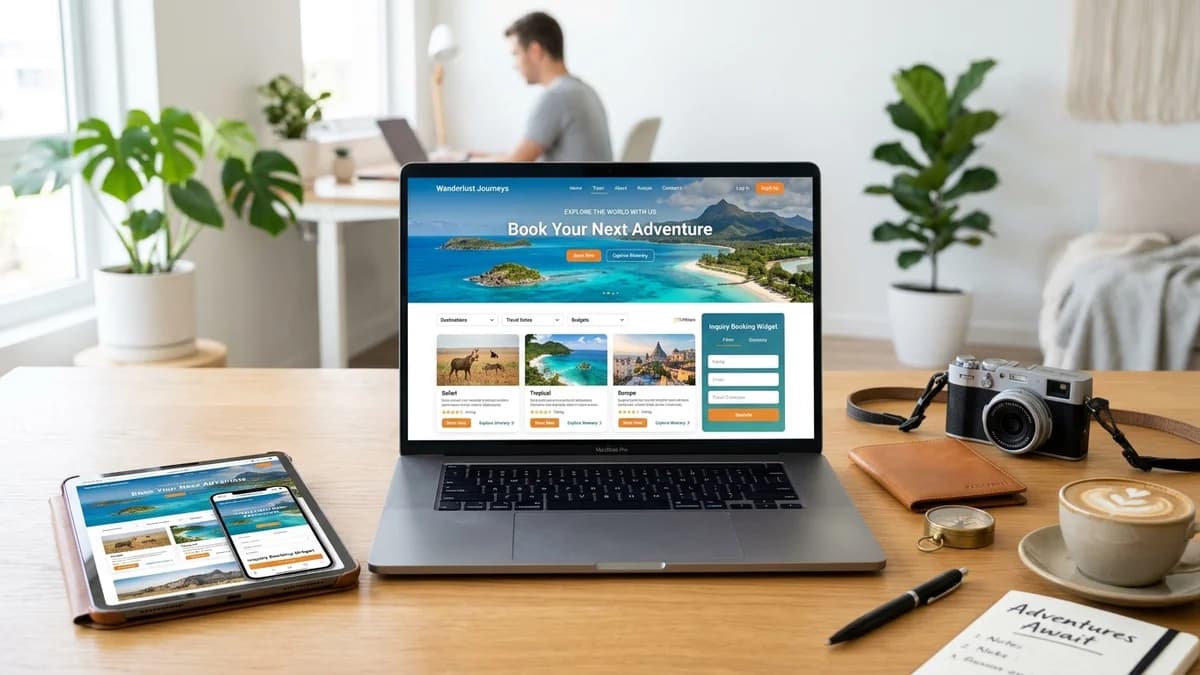
- Custom Itinerary Request Forms: Instead of a generic contact box, provide a structured inquiry form that collects essential trip parameters:
- Planned arrival date & flexibility
- Group size (adults, teenagers, children)
- Preferred accommodation style (Budget, Boutique, Luxury)
- Estimated total trip budget
- Specific bucket-list activities or dietary requirements
- Frictionless 1-Click WhatsApp Consultation: In many global tourism markets, travelers love the immediacy of mobile messaging. Implementing a floating WhatsApp widget allows prospective guests to get quick answers while browsing your packages. Check out our guide on turning website visitors into paying WhatsApp customers.
- Clear, Action-Oriented Calls to Action (CTAs): Buttons like “Request a Customized Itinerary”, “Check Season Dates & Availability”, or “Speak with a Destination Expert” consistently outperform vague buttons like “Submit”.
With a lead-capturing website, your sales team wakes up every morning with structured, qualified enquiries containing all the context needed to close high-ticket bookings rapidly.
6. Power Your Long-Term SEO and Generative AI Search (GEO)
Search engines have evolved. In 2026, travelers are not only searching with classic keywords; they are asking AI platforms (such as Google AI Overviews, Perplexity, and ChatGPT) complex questions:
“What is the best time of year to witness the Great Migration, and which local operator offers ethical private photographic safaris?”
If your business only exists as a Facebook page or an OTA listing, AI search engines cannot properly synthesize or cite your business. However, an authoritative website with a rich content architecture becomes a prime citation source for both traditional Google algorithms and modern Generative Engine Optimization (GEO).
By maintaining an active blog and destination resource center, your tourism website can publish:
- Comprehensive Packing Guides: What clothing, lenses, and medical supplies to pack for specific destinations.
- Seasonal Weather & Wildlife Calendars: Best months for gorilla trekking, scuba diving, bird watching, or cultural festivals.
- Visa, Health & Travel Requirement Guides: Up-to-date entry regulations, immunization requirements, and currency advice.
- Detailed Destination Comparisons: (e.g., “Serengeti vs Masai Mara: Which is better for a family safari?”)
Every useful travel article acts as an evergreen digital asset that attracts thousands of prospective travelers during their dream-and-planning phase, organically funneling them toward your commercial tour packages.
7. Deliver Mobile-First Speed for Travelers on the Move
Over 72% of travel-related searches and itinerary browsing happen on mobile devices. Travelers research tours on their phones while commuting, sitting in airport lounges, or relaxing at home.
If your website takes longer than 3 seconds to load or requires pinching and zooming to read text, travelers hit the back button immediately. According to Google Core Web Vitals benchmarks, every additional second of mobile latency slashes conversion rates by up to 20%.
Modern travel agencies and safari operators achieve unmatched competitive advantage by building on high-speed frameworks like Next.js rather than bloated, plugin-heavy legacy CMS setups:
- Sub-Second Page Loads: Static site generation and edge caching ensure itineraries load almost instantly worldwide.
- Automatic Image Optimization: High-definition safari and landscape images are automatically compressed into modern
.webpand.avifformats tailored to the visitor's screen. - Offline-Ready Performance: Fast, responsive layouts that work smoothly even on unstable 3G/4G connections while guests travel between destinations.
Frequently Asked Questions (FAQs)
Why is a dedicated website essential for a tourism business?
A dedicated tourism website establishes brand credibility, showcases transparent itineraries and pricing, eliminates 15-25% OTA commissions, and enables you to attract high-paying international travelers directly through search engines like Google.
Can a tourism business rely solely on social media and WhatsApp?
Social media and WhatsApp are powerful communication channels, but they do not rank on Google for commercial travel intent, cannot automate structured itinerary comparisons, and lack the professional authority needed for international travelers to transfer high-ticket deposits.
How does a professional website generate direct enquiries for tour operators?
Through clear calls to action, interactive day-by-day itineraries, customizable quote forms collecting dates and group sizes, frictionless 1-click WhatsApp buttons, and search engine optimization targeting high-intent travel queries.
How does a website help a tourism business attract international customers?
By implementing international travel SEO, multi-currency display, verified trust credentials (licenses, badges, real guest reviews), and comprehensive destination guides that answer foreign travelers' exact questions before booking.
What are the most critical features a tour operator website should have?
Mobile-first responsive design, fast page load times, detailed package itineraries with inclusions and exclusions, high-resolution visual galleries, secure payment or deposit gateways, and instant enquiry mechanisms.
Ready to Elevate Your Tourism Business with a Custom Website?
Whether you operate an established safari company, a growing travel agency, an adventure trekking outfit, or an independent boutique resort, your website is your most valuable revenue-generating asset.
At Joy Digital, we specialize in engineering lightning-fast, conversion-focused Travel and Tourism Websites built with cutting-edge Next.js architecture, robust technical SEO, and seamless WhatsApp inquiry integration.
- 🔍 Want to know how your current website is performing?
Claim your Free Website & SEO Audit Report – get a thorough evaluation of your site speed, mobile experience, and search ranking opportunities with zero obligation. - 🚀 Ready to launch or redesign your travel website?
Contact Joy Digital today or explore our Safari & Tour Operator Web Solutions to start turning online searches into high-margin direct bookings.
Recommended Services & Solutions
Frequently Asked Questions
Digital marketing strategist and Next.js web developer focusing on high-converting tourism web architecture, Core Web Vitals, and organic international travel SEO.