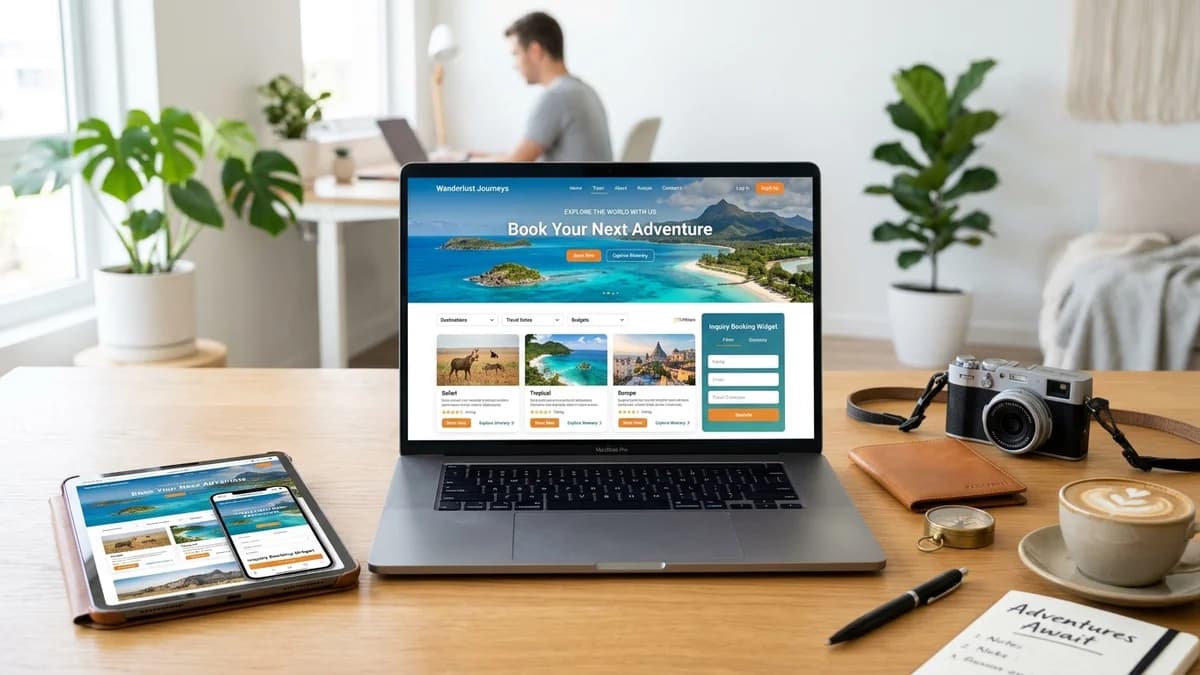
In the modern travel and hospitality industry, having a website that merely acts as an online photo album is no longer enough. While breathtaking imagery of sun-drenched beaches, misty mountain trails, and majestic wildlife safaris catches a traveler’s eye, visual appeal alone does not convert traffic into paying guests.
Today’s travelers are demanding, detail-oriented, and mobile-reliant. Before they transfer a multi-thousand-dollar deposit for an international tour or private safari, they seek clarity, security, transparent itineraries, and effortless ways to communicate with your team.
If your website is clunky on mobile devices, hides important package details behind unreadable PDF downloads, or forces visitors through complicated 10-step checkout screens, they will simply abandon your site and book through third-party Online Travel Agencies (OTAs) like Viator or Booking.com—costing you 15% to 25% in commission fees.
Whether you manage an international travel agency, an adventure tour company, or an African safari operation, implementing the right tourism website features is the single highest-ROI investment you can make in your digital sales pipeline.
Here is an in-depth breakdown of the four foundational features every tourism business website must have to capture buyer trust, dominate search engine rankings, and convert casual visitors into confirmed direct bookings.
Quick Comparison: Generic Brochure Website vs High-Converting Tourism Website
| Feature Dimension | Outdated Generic Travel Site | High-Converting Tourism Website |
|---|---|---|
| Mobile Experience | Desktop layout squished onto mobile screens; sluggish | Native mobile-first UX with sub-second page loads (< 1.2s) |
| Tour Presentation | Short paragraphs with vague PDF links | Interactive day-by-day itineraries with clear inclusions & exclusions |
| Lead Capture | Single generic "Contact Us" email box | Dynamic multi-step quote builder + 1-Tap WhatsApp chat |
| SEO Architecture | Flat hierarchy; thin content; zero structured schema | Dedicated destination topic clusters + Rich Tour & FAQ Schema |
| Trust Indicators | Unverified stock reviews and no credentials | Live TripAdvisor/Google feeds + IATA/ASTA/TATO badges |
1. Mobile-First Responsive Design and Sub-Second Loading Speed
Over 72% of all travel searches, itinerary explorations, and last-minute booking inquiries take place on smartphones. Travelers browse vacation packages while commuting on the train, relaxing on the sofa, or comparing options on lunch breaks.
If a traveler lands on your website and has to pinch, zoom, or wait more than three seconds for high-resolution destination photos to load, they will tap the back button immediately. Google data confirms that every 1-second delay on mobile drops conversions by up to 20%.
[Mobile Traveler Journey]
Visitor Clicks Search Link on Smartphone
               │
               ▼
   Page Loads in Under 1 Second (Next.js Edge CDN)
               │
               ▼
   Collapsible Daily Itineraries & Sticky WhatsApp Bar
               │
               ▼
   Frictionless 1-Tap Inquiry / Instant Direct Booking
Critical Mobile Requirements for Tourism Websites:
- Sub-Second Core Web Vitals: Building your website with modern frameworks like Next.js web development enables static pre-rendering, automatic image compression (
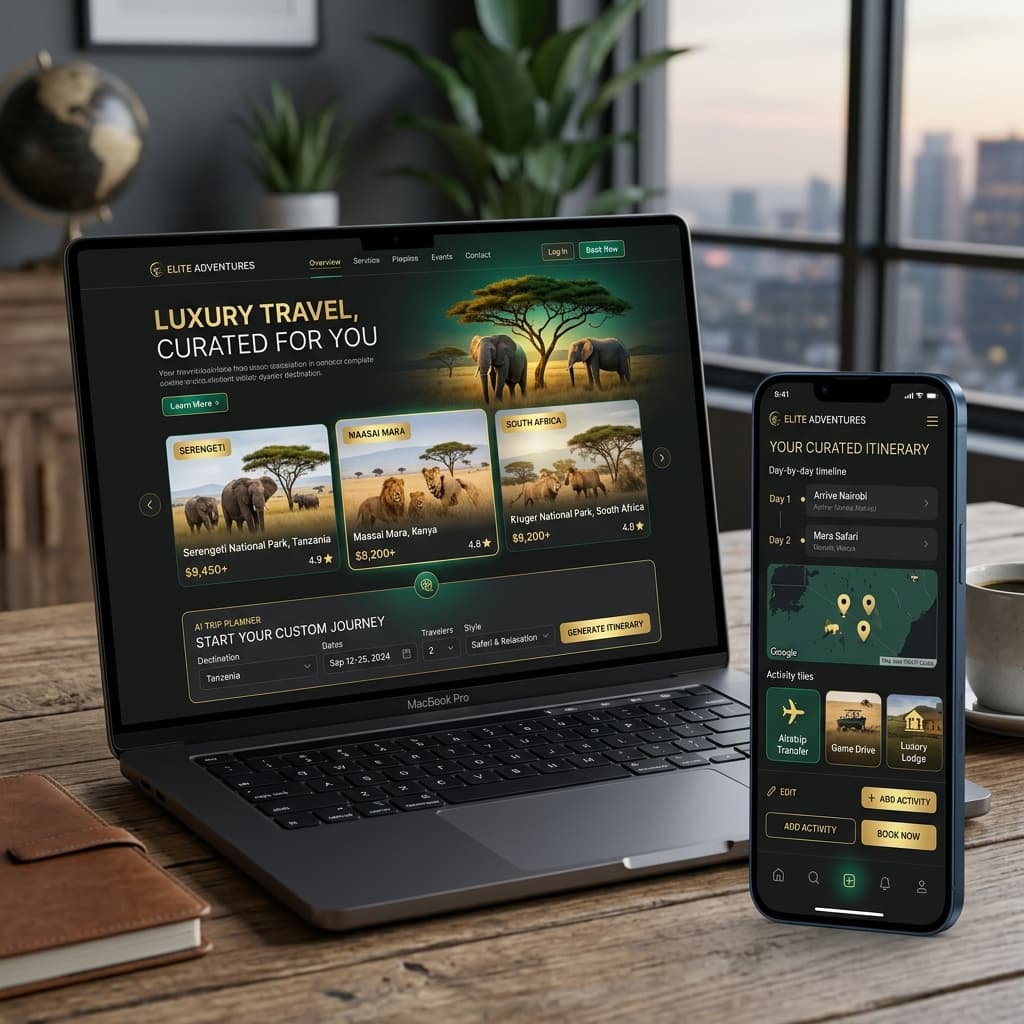
.webpand.avif), and global CDN caching. Pages load almost instantaneously even on unstable 3G/4G networks. - Sticky Bottom Call-to-Action Bar: Keep essential actions—such as “WhatsApp Us” and “Check Dates / Request Quote”—anchored to the bottom of the mobile viewport so visitors never have to scroll back to the top to reach out.
- Thumb-Friendly Touch Targets: Buttons and navigation links must be generously spaced to prevent accidental mis-clicks on smaller phone screens.
- Collapsible Day-by-Day Accordions: Instead of forcing mobile users to endlessly scroll through 30 pages of text for a 14-day itinerary, organize daily schedules into tap-to-expand accordions.
A flawless mobile experience communicates competence and modern reliability before the traveler even reads your first sentence.
2. Comprehensive Tour and Destination Package Architecture
The heart and soul of any tour operator website is its tour package pages. Vague descriptions such as “7 Days of Exploring Kenya with Great Guides” will not convince an international traveler to commit thousands of dollars.
High-converting package pages provide a rich, transparent, and immersive overview of the trip that answers every conceivable question in advance.
The Anatomy of an Irresistible Tour Package Page:
- Interactive Day-by-Day Itineraries: Break down the trip into daily chapters detailing travel times, morning game drives, included meals, and overnight accommodation names.
- Crystal-Clear Inclusions and Exclusions Matrix: Use distinct green checkmarks (
✓) for inclusions (park entry fees, 4x4 Land Cruiser transport, professional driver guide, full-board meals) and red crosses (✗) for exclusions (international flights, tipping, personal travel insurance, alcoholic beverages). This transparency eliminates doubt and eliminates endless pre-booking questions. - Transparent Tiered Pricing: Clearly explain pricing variations based on party size, seasonal travel periods (Peak Season vs Low Season), and lodging comfort levels (Budget Camping vs Mid-Range Lodges vs Luxury Tented Suites).
- Interactive Route & Destination Maps: Visual maps illustrating the travel loop, flight hops, and national park waypoints give travelers an intuitive grasp of the journey's geography.
- Authentic Visual Proof & High-Res Galleries: High-definition, unedited photos of your real safari vehicles, guide uniforms, lodge rooms, and guest experiences establish authenticity that generic stock photography can never replicate.
- Downloadable PDF Itinerary Summary: A clean, branded 1-click PDF download allows group leaders or family planners to easily print or forward your proposed itinerary to travel companions.
Learn more about the best ways to structure your tour pages in our guide on why safari and adventure travel businesses need a professional website.
3. Frictionless Enquiry and Dynamic Booking Functionality
A visually stunning website that fails to collect leads is merely an expensive digital brochure. Your website must provide a seamless, intuitive bridge between interest and action.
Depending on your specific tourism business model, you need to match your booking functionality to how your clients purchase:
Which Booking Model Fits Your Business?
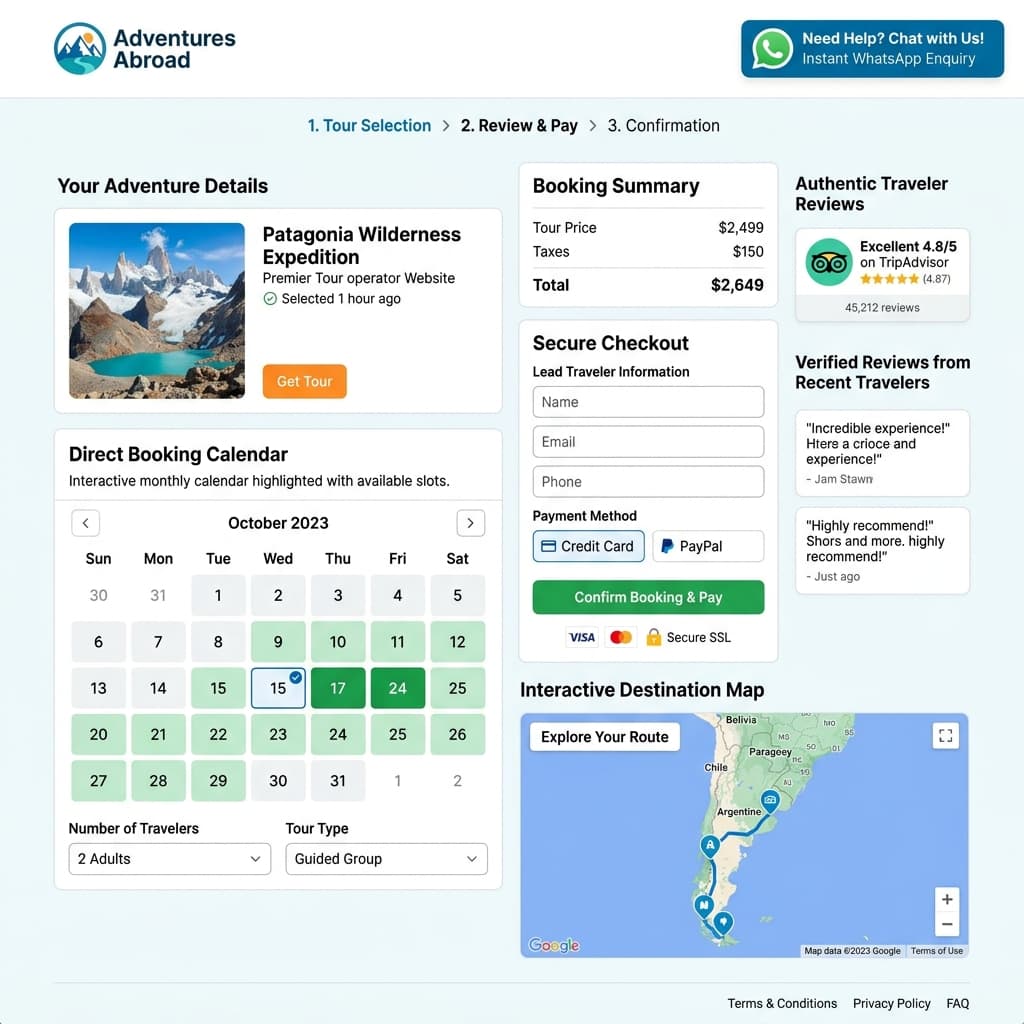
- Instant Online Booking Engine (Best for Fixed-Price Day Tours & Scheduled Group Departures): If you operate city walking tours, day excursions, or airport transfers with predetermined pricing, direct credit card checkout via Stripe or PayPal works best.
- Custom Itinerary & Enquiry Builder (Best for Multi-Day, Luxury & Private Tours): For custom wildlife safaris, honeymoon packages, and bespoke private itineraries, travelers rarely swipe a credit card without first speaking to a human. Here, a dynamic enquiry form combined with direct WhatsApp consultation generates up to 3.5x higher conversion rates.
Essential Elements of a High-Converting Tourism Enquiry Form:
- Trip Dates & Flexibility: Inquiring whether dates are fixed or flexible helps operators suggest optimal seasonal departures.
- Traveler Count & Group Makeup: Number of adults, teens, and infants to calculate vehicle and room configurations accurately.
- Accommodation & Comfort Preference: Budget, 3-Star Comfort, 4-Star Luxury, or 5-Star Ultra-Boutique.
- Estimated Total Budget: Filters out unqualified inquiries and ensures your team proposes itineraries that fit the client's financial expectations.
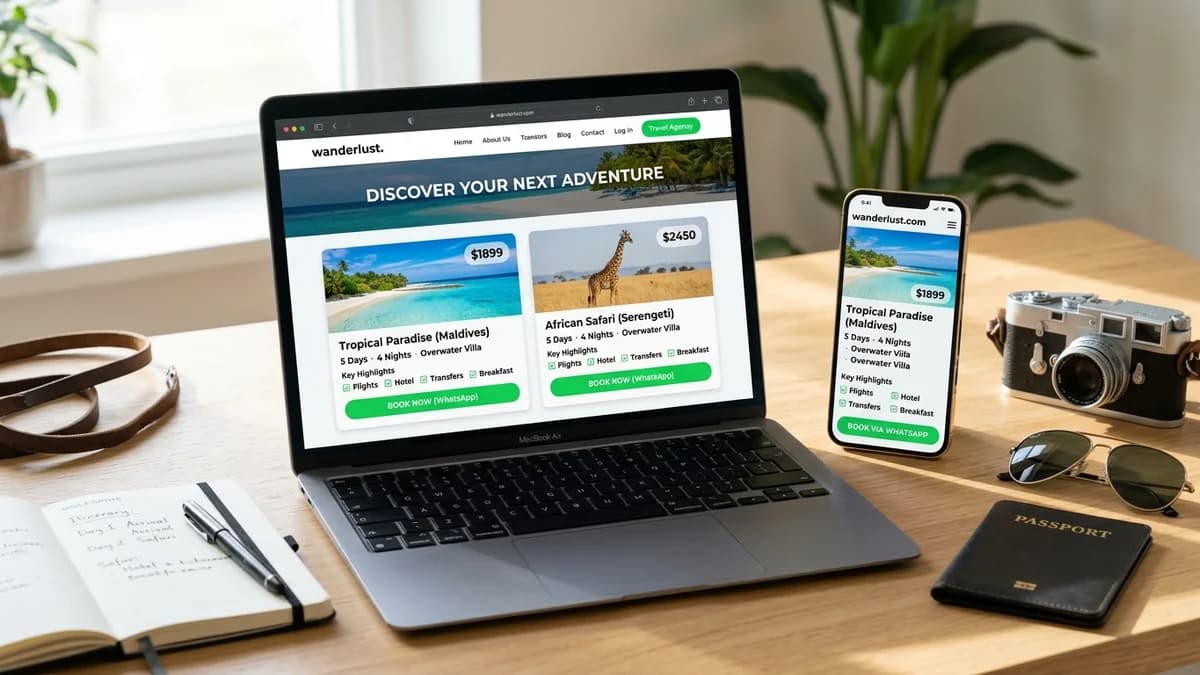
- One-Click WhatsApp Integration: In international tourism, rapid response times dictate booking wins. Adding a smart WhatsApp consultation widget lets potential travelers connect instantly with an expert. Read our detailed guide on turning website visitors into WhatsApp customers.
4. SEO-Friendly Website Architecture and Semantic Topic Clusters
Even the most beautiful tourism website will fail if prospective guests cannot find it on Google.
Too many tourism operators make the mistake of grouping dozens of destinations onto a single generic page. Search engines require structured, topical depth to recognize your website as an authority on specific travel experiences.
[Logical Travel SEO Hierarchy]
                joydigital.in/
                      │
        ┌─────────────┴─────────────┐
        ▼                           ▼
/destinations/                  /tours/
   ├── /kenya/                     ├── /7-day-masai-mara-safari/
   │     └── /masai-mara/          └── /luxury-serengeti-honeymoon/
   └── /tanzania/
         └── /serengeti/
Essential Travel SEO Architecture Pillars:
- Dedicated Destination & National Park Hubs: Create distinct pages for every primary region, national park, or city you serve (e.g.,
/destinations/tanzania/serengeti). Each page should detail wildlife highlights, best months to visit, weather patterns, and list all related tour packages. - Schema Markup (Structured Data): Implement structured
Tour,Trip,Product,FAQPage, andBreadcrumbListschemas in JSON-LD. This allows search engines to display rich snippets—such as pricing, trip duration, customer ratings, and FAQs—directly inside Google search results. - Internal Linking Between Destination Guides and Packages: Connect your informational blog guides (e.g., “Best Time for the Great Migration”) directly to relevant commercial booking pages using contextual anchor text.
- AI & Generative Engine Optimization (GEO): With Google AI Overviews and conversational AI engines (ChatGPT, Perplexity) answering complex travel queries, websites with clear semantic headings (
H2,H3), structured tables, and verifiable author credentials (E-E-A-T) are far more likely to be cited as primary recommendations.
To build a commanding organic presence, consult our specialized Travel SEO Services tailored for tourism operators.
Bonus: Non-Negotiable Trust and Security Signals
International travelers are inherently cautious about wiring money to foreign businesses. Integrating overt trust signals across your website turns hesitation into confidence:
- Official Association Badges: Display recognizable logos from regional and international tourism boards (IATA, ASTA, KATO, TATO, or National Tourism Boards).
- Live Review Integration: Embed verified live review feeds from TripAdvisor, Google Business Profile, and Trustpilot.
- Bank-Grade SSL & Secure Payment Badges: Reassure travelers that credit card deposits and personal information are guarded with 256-bit encryption.
- Meet the Team & Field Guide Bios: Real photographs and background stories of your licensed guides and founders humanize your brand and establish immediate warmth.
Frequently Asked Questions (FAQs)
What are the most critical tourism website features for increasing direct bookings?
The four most critical features are a mobile-first responsive layout with fast load times, detailed day-by-day tour package pages with transparent inclusions, a frictionless custom enquiry form paired with 1-click WhatsApp messaging, and a search-optimized site architecture that ranks for destination intent.
Should a tour operator website offer instant online booking or an enquiry form?
For fixed-price day tours and scheduled group excursions, instant online booking is best. For high-ticket, customizable trips, luxury honeymoons, and private safaris, a structured enquiry form combined with WhatsApp consultation generates significantly higher conversion rates.
Why is mobile optimization more crucial for tourism than other industries?
Over 72% of travel research, itinerary comparisons, and in-destination booking decisions occur on smartphones. A slow or poorly formatted mobile experience causes travelers to bounce immediately to competing operators or OTAs.
What should be included on a tour package itinerary page?
A comprehensive itinerary page should include a chronological day-by-day activity breakdown, crystal-clear inclusions and exclusions checklists, high-definition photo galleries, accommodation standards, transparent pricing or quotation tiers, and clear call-to-action buttons.
How does an SEO-friendly website structure benefit a travel company?
A clean site structure with distinct destination hubs, logical URL hierarchies, and structured schema markup (Tour Schema and FAQ Schema) helps search engines understand your services and ranks your packages directly above third-party OTA marketplaces.
Transform Your Tourism Website into a Direct Booking Machine
Is your current travel website delivering steady inbound enquiries, or are you losing high-paying international guests to OTAs and competitor platforms?
At Joy Digital, we specialize in designing and engineering high-performance Travel Website Solutions and Safari Website Development. Built on ultra-fast Next.js architecture, our websites feature mobile-first itinerary layouts, integrated WhatsApp lead funnels, and advanced travel SEO frameworks designed to drive profitable direct bookings.
- 🔍 Uncover Your Website's Hidden Potential:
Claim your Free Website & SEO Audit Report – get actionable insights on your page speed, mobile UX, and organic ranking gaps with zero obligation. - 🚀 Ready to Build a High-Converting Travel Website?
Contact Joy Digital today or explore our Tour Operator Website Solutions to bring your digital vision to life.
Recommended Services & Solutions
Frequently Asked Questions
Digital marketing strategist and Next.js web developer focusing on high-converting tourism web architecture, Core Web Vitals, and organic international travel SEO.