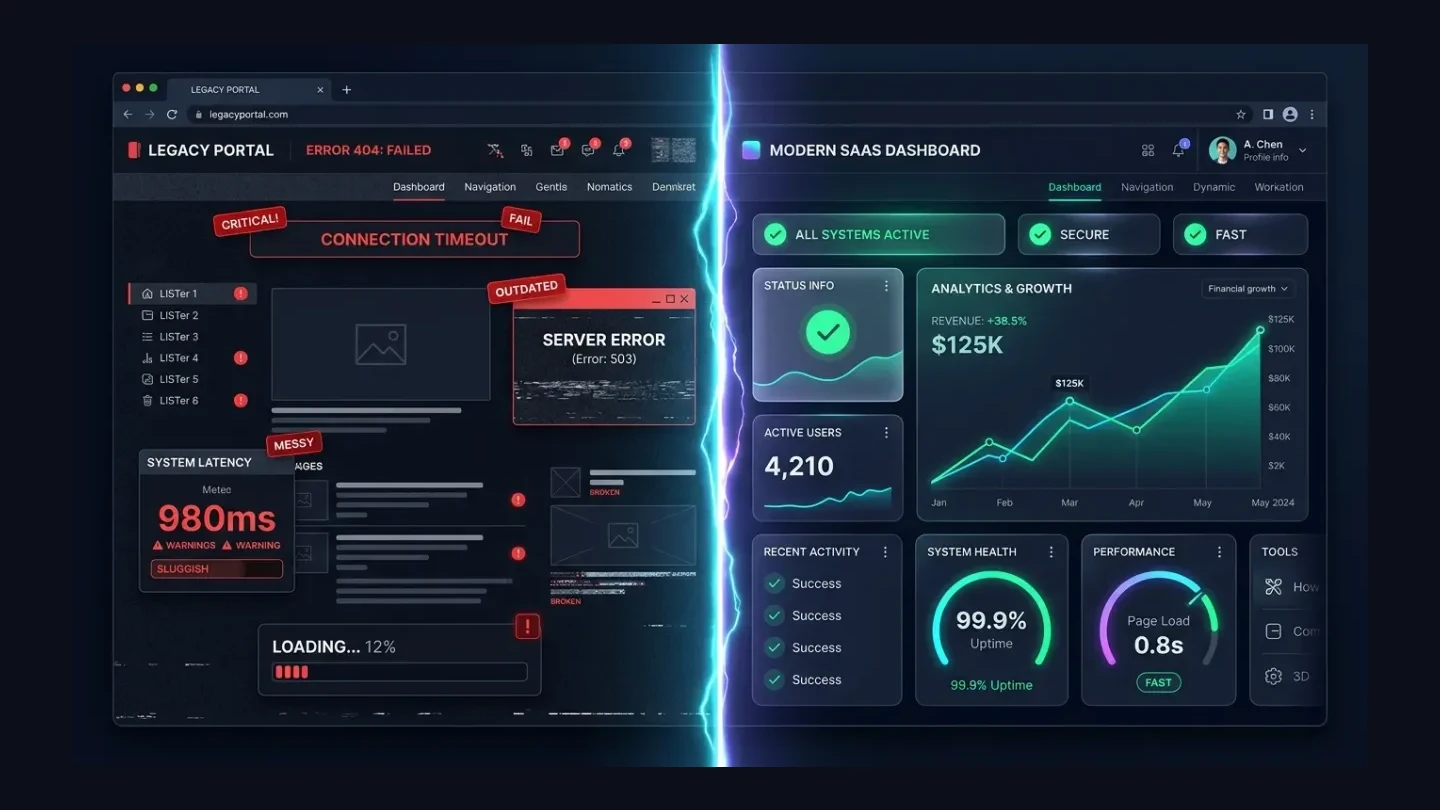
When you first launch a brand-new business, choosing a template builder like Wix, Squarespace, or a standard WordPress theme makes complete operational sense. In the early stages, your priority is simple: get an MVP (Minimum Viable Product) live on a tight budget with minimal setup time.
However, as your business grows into six or seven figures in annual revenue, the digital tools that got you here are often not the tools that will take you to the next tier of scale.
Suddenly, your marketing team is terrified of clicking "Update All Plugins" because it might crash the checkout page. Your site takes 5 seconds to load on mobile. Enterprise prospects question your security credibility. And when you ask your developer to build a tailored customer portal or multi-currency pricing matrix, the answer is always: "WordPress can't do that without another buggy plugin."
If this sounds uncomfortably familiar, you have not failed at web management—your business has simply outgrown off-the-shelf site builders.
Here is an objective comparison between traditional template platforms and custom web engineering, and why modern enterprises are migrating to custom full-stack architecture.
The Hidden Bottlenecks of Template Builders
Off-the-shelf page builders are engineered for convenience, not high-performance enterprise scaling. As your operational complexity increases, four critical bottlenecks emerge:
1. The "Plugin Jenga" Tower
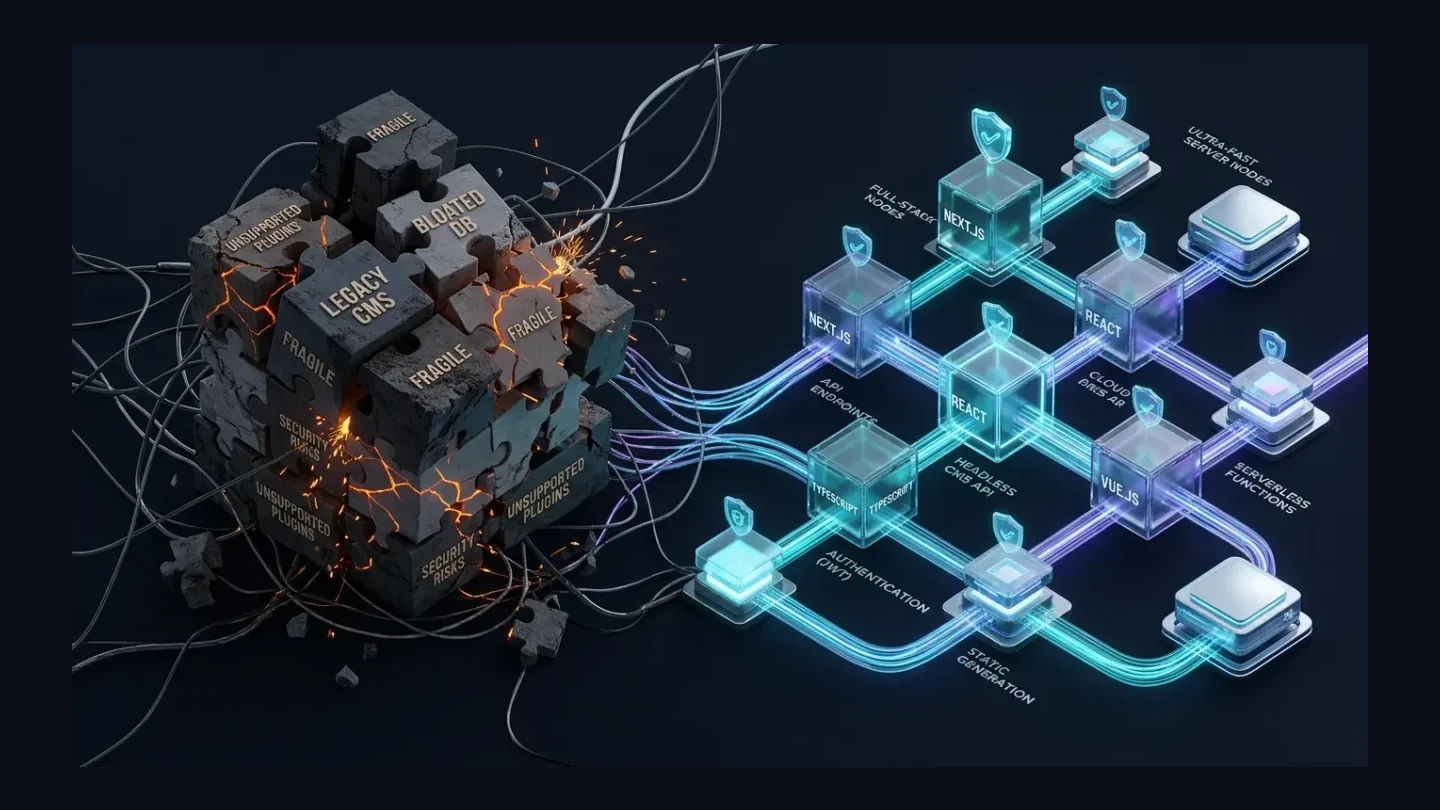
To get modern business features on WordPress, companies typically install between 25 and 45 plugins: one for SEO, one for forms, one for caching, one for security, one for popups, and one for schema markup.
Every plugin introduces third-party code that runs on your server. When one plugin updates its code, it frequently breaks compatibility with three others, creating site-wide downtime and unexpected bug emergencies.
2. Massive Technical Bloat & Database Lock-In
Page builders like Elementor or Divi inject dozens of nested <div> wrappers and unused CSS frameworks into every page. Search engine crawlers struggle to parse your actual content through the code bloat, and server response times (TTFB) degrade as the MySQL database bloats with post revisions and transient options.
3. Chronic Security Vulnerabilities
Because WordPress powers over 40% of the web, it is the primary target for automated malware bots and hackers worldwide. Over 90% of all compromised CMS websites are WordPress installations, with the overwhelming majority of breaches traced directly to outdated third-party plugins.
4. Rigid UI/UX and Feature Ceilings
Try building a dynamic multi-step loan calculator, an interactive safari itinerary builder, or a real-time supplier portal on Wix or WordPress. You will immediately encounter hard platform limitations that force your business processes to compromise.
Architectural Showdown: WordPress / Wix vs. Modern Custom Stack
Let's examine the architectural difference between legacy monolithic builders and modern custom engineering (Next.js, TypeScript, Tailwind CSS, Edge CDNs):
| Architectural Metric | Traditional Site Builders (WordPress / Wix) | Joy Digital Custom Full-Stack Architecture |
|---|---|---|
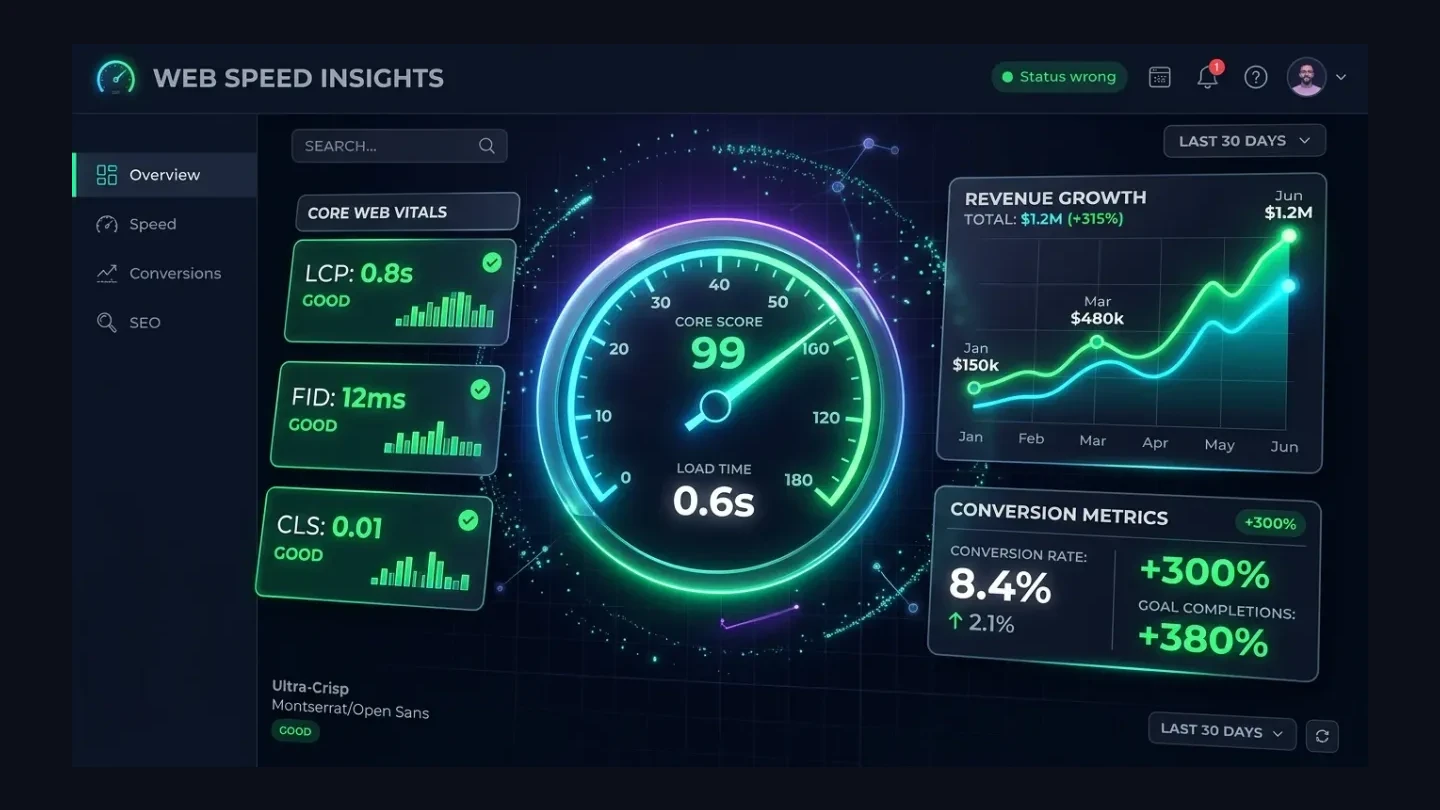
| Page Speed & Load Times | 3.5s – 6.0s (Heavy server execution & plugins) | Sub-second (0.4s – 1.0s) guaranteed |
| Google Core Web Vitals | Frequently fails LCP and INP metrics | Consistent 95–100 Scores on Mobile & Desktop |
| Security Surface | High risk; direct database exposure & plugin bugs | Bank-Grade; decoupled frontend, zero exposed DB |
| Custom Functionality | Restricted by template theme files & plugins | 100% Bespoke; any workflow, portal, or API |
| Server Scaling | Stutters or crashes under sudden traffic surges | Infinite serverless auto-scaling on Global Edge |
| Content Management | Monolithic dashboard tied directly to frontend | Headless CMS (Clean, modern editor experience) |
| Ownership of Code | Locked into proprietary ecosystem or heavy CMS | 100% Yours; fully portable, clean source code |
[Legacy Monolithic Architecture]
Client Browser ➔ Shared Host Server ➔ PHP Execution + 30 Plugins ➔ Heavy DB Query ➔ Bloated HTML (3.5s+)

[Modern Custom Decoupled Architecture]
Client Browser ➔ Nearest Edge CDN Node ➔ Instant Pre-rendered Static/SSR Page (0.4s)
                                       └── Secure Background API for Dynamic Data
Need a Website That Converts Visitors into Direct Paying Clients?
Most websites fail to generate sales because they are slow and lack conversion funnels. Joy Digital builds custom, sub-second Next.js web applications with 95+ PageSpeed, built-in SEO, and frictionless 1-click WhatsApp lead captures.
The Total Cost of Ownership (TCO) Myth: Is Custom Development Truly More Expensive?
The biggest hesitation business owners have when considering custom website development is the initial engineering cost. It is true: building a tailor-made digital platform requires skilled software engineers, which costs more upfront than installing a $59 WordPress theme.
However, smart CFOs and business owners evaluate Total Cost of Ownership (TCO) over a 2 to 3-year timeline:
The Hidden 2-Year Cost of a "Cheap" WordPress Site:
- Premium Plugin Licenses: $800 – $2,500/year (Forms, SEO, Caching, Security, ACF Pro, Backups).
- High-End Managed Hosting: $600 – $1,800/year (to prevent the bloated site from crawling).
- Emergency Developer Retainers: $2,500 – $6,000/year (fixing crashed updates and plugin bugs).
- Lost Conversion Revenue: Often $20,000 – $50,000+/year in sales abandoned by mobile visitors due to 4-second load times.
The Financial Reality of Custom Architecture:
With custom Next.js web development, you eliminate recurring plugin licenses entirely. Your hosting runs on highly efficient serverless infrastructure (often costing just a fraction of heavy CMS hosting), and maintenance emergencies drop by over 90%.
Most importantly, the instant sub-second speed and tailored user journey typically increase lead conversion rates by 2x to 3x, paying for the entire development cost within the first 60 to 90 days of launch.
Real-World Signs Your Business Has Outgrown Site Builders
How do you know it's officially time to make the switch? Look for these 5 operational signals:
- Your Bounce Rate is Above 60%: Mobile visitors are leaving before your pages finish loading.
- You Spend More Time Fixing Bugs Than Marketing: Your team dreads updating WordPress core or WooCommerce extensions because something always breaks.
- Your Brand Looks Like Everyone Else: Prospective high-ticket clients don't see an industry leader—they see a generic template that looks like their local gym's site.
- You Need Complex Business Integrations: You want your website to communicate directly with your ERP, CRM (HubSpot, Salesforce, Zoho), custom billing, or WhatsApp automated lead funnels.
- You are Expanding Internationally: You need geo-located speeds and localized content across the USA, UK, UAE, and Europe that monolithic shared servers simply cannot deliver.
How Joy Digital Executes a Zero-Downtime Migration
Migrating away from WordPress or Wix doesn't mean starting from scratch or risking your hard-earned Google search rankings.
At Joy Digital, we follow a precision WordPress to Next.js migration playbook:
- Complete SEO Preservation: We audit every existing ranking URL, metadata configuration, and structured schema tag. Flawless 1:1 redirect maps ensure you don't lose a single ounce of domain equity.
- Content Migration: We extract all your historic blog posts, images, and case studies, cleaning up legacy HTML bloat and transferring them smoothly to a high-speed Headless CMS.
- Bespoke UI/UX Redesign: We craft a sleek, high-converting visual experience engineered around your exact sales funnel and brand positioning.
- Testing & Instant Cutover: We stage and test the entire platform on private cloud environments, executing the live DNS switchover with zero disruption to your active customers.
Stop Letting Fragile Builders Limit Your Revenue Potential
Your website should be an accelerating asset, not a source of weekly technical anxiety. If your business has evolved beyond what basic site builders can offer, it's time to build a digital platform that matches the quality and ambition of your company.
Schedule Your Custom Architecture Consultation Today
Let's discuss your current platform challenges, growth goals, and how a custom Next.js web application can scale your business.
👉 Schedule a Platform Consultation with Joy Digital – Speak directly with a senior web architect to map out your migration strategy. Or request a free website audit to benchmark your current setup's speed and conversion performance.
Recommended Services & Solutions
Frequently Asked Questions
Digital marketing strategist and Next.js web developer focusing on search optimization, Core Web Vitals, and B2B conversion rate growth.